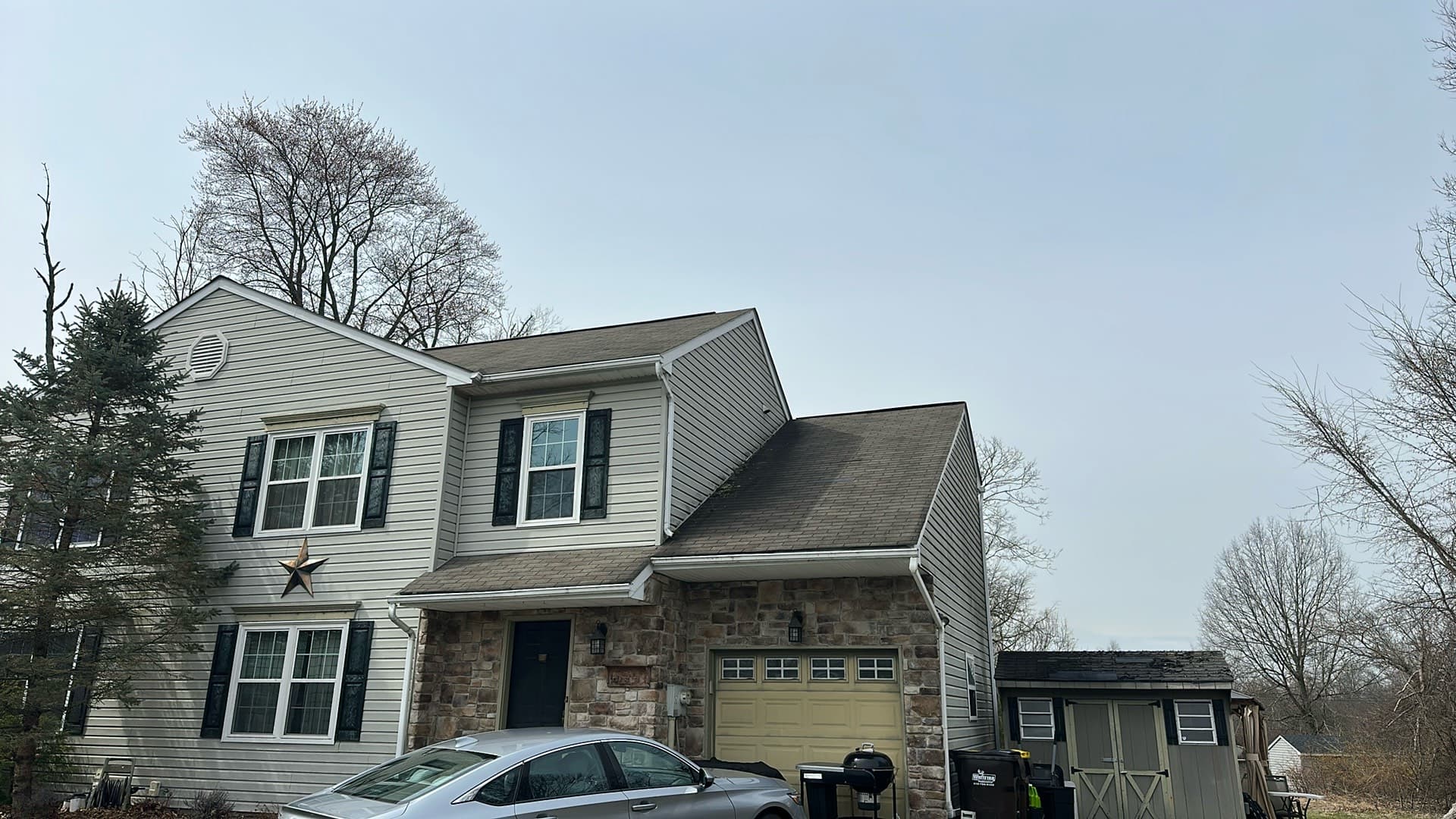
When to Replace a Roof: Clear Signs It’s Time
Jeff Stover
Owner of E&K Contracting with 20+ years of exterior remodeling experience in Bucks, Lehigh, and Montgomery Counties.
If you are asking when to replace roof materials, the short answer is this: replace it when age, repeated leaks, widespread wear, or rising repair costs show that patching is no longer the smart fix. A roof replacement makes more sense when the roof is failing as a system, not just in one isolated spot.
When roof replacement makes more sense than another repair
A common turning point is simple: you notice a fresh ceiling stain after a hard rain, then another a few months later. At that point, the question is no longer just how to stop one leak. The real issue is whether your roof still has dependable service life left.
In most homes, replacement becomes the better choice when the roof is older, has leaked more than once, shows damage in multiple areas, or needs repairs that keep stacking up. Roofs are most often replaced because of leaks or storm damage, which matches what many homeowners already suspect: repeated symptoms usually point to a bigger problem.
The basic rule to use first
Use a simple rule. If your roof is near the end of its expected lifespan, leaks more than once, shows wear across several sections, or repair costs exceed about 30 percent of the cost of a new roof, replacement is usually the better move. That threshold is widely used because expensive repairs on an aging roof often buy only limited time.
Why age alone Doesn’t tell the whole story
Age matters, but it does not decide the whole question. Material type, storm exposure, attic ventilation, installation quality, shade, and tree cover all affect how long a roof lasts. A roof labeled as a 30-year product may not last 30 years in real conditions, especially if ventilation is poor or the roof takes regular weather stress. In fact, attic ventilation can significantly affect shingle life because trapped heat and moisture wear materials out faster.
Clear signs your roof is ready to be replaced
You can often spot replacement signs from the ground, on interior ceilings, or in the attic. The trick is to look for patterns instead of one isolated flaw.
Shingles are curling, cracking, balding, or going missing
Curling shingles have edges that turn up or tabs that distort. Cracked shingles split and become easier for wind and water to penetrate. Balding means the shingle surface is losing granules, the gritty layer that protects asphalt from sun and weather. Missing shingles leave exposed areas behind.
One missing shingle after a storm does not always mean full replacement. But recurring shingle loss, widespread cracking, or visible wear across many sections usually means the roof is nearing the end.
Leaks keep coming back
Repeated leaks are a replacement sign, not just a nuisance. Ceiling stains, damp insulation, musty attic smells, or water entry around chimneys and vents all suggest the roofing system is losing integrity. If one patch leads to another and leaks return after heavy rain, the roof is often past the point where spot repairs make sense.
Your roofline looks uneven or sagging
A sagging roofline is not a cosmetic problem. A dip or droop can point to trapped moisture, rotted roof decking, or framing trouble underneath. If your roof looks uneven from the street, prompt professional evaluation is the right response. A sagging roofline is commonly treated as a structural warning, not something to watch for a few more seasons.
You see trouble in the attic
Your attic can reveal roof failure before the exterior tells the whole story. Look for daylight through roof boards, wet insulation, dark staining on wood, or persistent dampness. Ventilation, meaning the way heat and moisture escape the attic, matters here because poor airflow shortens roof life and raises the risk of mold and wood damage.
Granules in gutters and flashing problems
Asphalt granules protect shingles from weathering. If your gutters are filling with granules years after installation, the shingle surface is wearing out. Damaged flashing around chimneys, skylights, and roof valleys is another common trigger for replacement, especially when those details are failing in several places at once.
How long roofs usually last by material
Roof life varies widely by material, and these ranges are typical, not guaranteed.
Asphalt shingles
Three-tab shingles often last about 15 to 20 years. Architectural shingles usually last about 20 to 30 years, sometimes a bit longer with good installation and maintenance.
Metal, tile, and slate
Metal roofs often last 40 to 80 years. Clay or concrete tile can last 50 to 100 years or more. Slate can last decades longer than that. But even long-life materials can need earlier replacement if flashing fails, fasteners back out, or roof decking underneath deteriorates.
What shortens roof life in southeastern pennsylvania
In Bucks, Lehigh, and Montgomery counties, roof life is shaped by freeze-thaw cycles, summer humidity, wind-driven rain, hail, snow loads, and shade from mature trees. Shade sounds helpful, but the catch is that it can keep moisture on the roof longer. Temperature swings, precipitation, and nearby trees all affect replacement timing.
Repair or replace? how to decide without guessing
The goal is to avoid spending good money on repairs that only delay an unavoidable replacement.
Compare the cost of repairs to the cost of a new roof
If repairs will cost more than about 30 percent of replacement cost, full replacement often makes more sense. A professional estimate gives you the real number for your home, but the 30 percent rule is a useful first filter.
Look at how widespread the damage is
An isolated problem near one vent boot is different from damage spread across several roof slopes, valleys, or penetrations. If wear shows up in multiple areas, the roof is usually failing as a whole system. That pattern matters more than one bad shingle.
Think about timing if you plan to sell or stay
If you plan to stay for years, replacement may prevent ongoing repair costs and interior damage. If you plan to sell sooner, roof condition still matters because aging materials and visible defects can affect buyer confidence and inspection results. Here, the practical question is simple: will another repair realistically hold through another Pennsylvania winter?
What to check before you schedule roof replacement
Before scheduling work, take a few safe, practical steps.
Start with a safe visual check
Check from the ground with binoculars. Look for missing shingles, dark patches, exposed fiberglass mats, bent flashing, or visible sagging. Then check the attic for stains, wet insulation, or light coming through boards. Do not climb onto the roof yourself.
Schedule a professional inspection
A roof inspection usually covers shingles, flashing, decking condition, ventilation, leak sources, and storm damage. If your roof is older or showing symptoms, an inspection is worth it because it replaces guesswork with a clear condition report.
Ask these questions during the inspection
Ask whether damage is isolated or widespread, whether the decking is still sound, how much life is realistically left, and whether a repair is likely to hold up through another winter. If you are comparing contractors, companies with 20+ years of exterior remodeling experience, such as E&K Contracting, Inc. in Quakertown, can usually explain these distinctions in plain terms.
Best time of year to replace a roof
Timing matters, but condition matters more.
Spring and fall are common, but urgency matters more
Spring and fall are popular because moderate weather can help scheduling and installation. But an active leak, recent storm damage, or visible sagging should not wait for an ideal month. Delay can turn a roofing problem into damaged insulation, drywall, and decking.
After storms, move quickly even if damage looks minor
Wind and hail damage is easy to miss at first. After severe weather, especially if you notice trouble with shingles, siding, or gutters, arrange an inspection promptly. Small storm damage can become a bigger leak path by the next hard rain.
A simple next step if You’re unsure
Try one thing this week: check your attic after the next rain. If you notice staining, damp insulation, musty air, or daylight through roof boards, schedule an inspection and get a clear replacement versus repair assessment before the problem spreads.
Frequently Asked Questions
How old should a roof be before you replace it?
There is no single age that fits every roof. Many asphalt shingle roofs need close evaluation around the 15 to 20 year mark for three-tab shingles and around 20 to 30 years for architectural shingles. Condition matters as much as age.
Can a leaking roof be repaired instead of replaced?
Yes, if the leak is isolated and the surrounding roof is still in good condition. If leaks keep returning, show up in multiple areas, or happen on an older roof, replacement is usually the better long-term fix.
Is it better to replace a roof before it starts leaking?
Often, yes. Replacing a roof before failure can prevent damage to insulation, ceilings, decking, and framing. If your roof is older and showing visible wear, waiting for a leak is usually the more expensive route.
How do you know if roof damage is widespread?
Look for repeating issues across more than one area, such as missing shingles on several slopes, multiple leak points, granule loss in many sections, or flashing problems around different penetrations. A professional inspection confirms whether the issue is localized or systemic.
Does attic ventilation really affect when a roof needs replacement?
Yes. Poor attic ventilation traps heat and moisture, which can shorten shingle life and contribute to staining, mold, and wood damage. Good airflow helps the roof dry properly and can extend service life.
Roofing done right, the first time
E&K Contracting has served Bucks, Lehigh, and Montgomery County homeowners for over 20 years. Free estimates, no pressure.