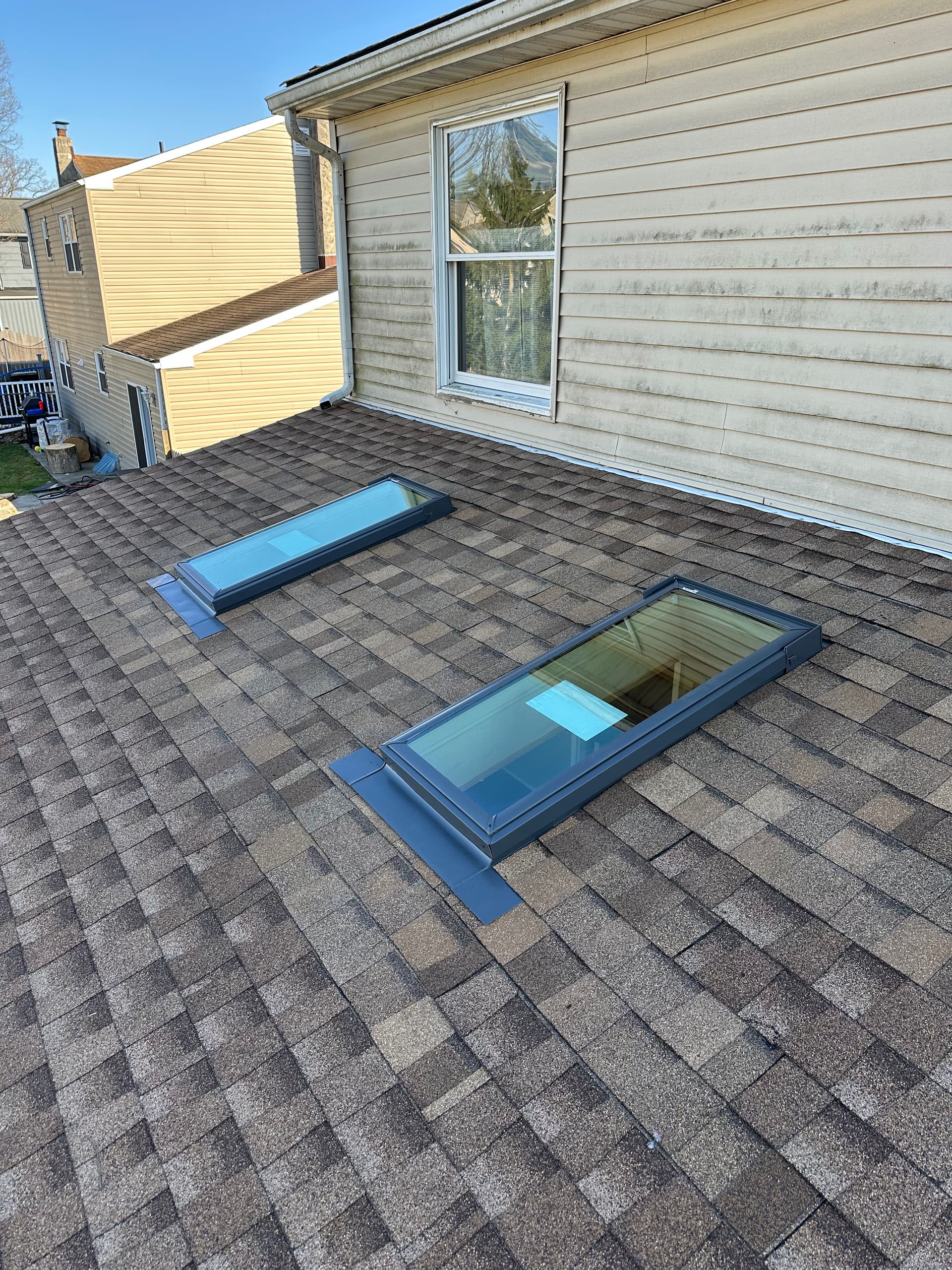
Skylight Replacement: When It's Time and How to Do It Right
Jeff Stover
Owner of E&K Contracting with 20+ years of exterior remodeling experience in Bucks, Lehigh, and Montgomery Counties.
A skylight can fill a room with daylight for many years, but it does not last forever. Seals fail, flashing ages, and older units can start to leak or fog. Here is how to tell when skylight replacement makes sense and what a proper replacement involves.
Signs your skylight needs to be replaced
Leaks and water stains
Stains on the ceiling or drywall around the skylight opening are the most common warning sign. Peeling paint, bubbling drywall, or damp spots after rain all point to water getting in. Leaks often start at the flashing where the skylight meets the roof rather than in the skylight itself.
Fogging between the panes
If you see a cloudy haze or moisture trapped between the layers of glass that you cannot wipe away, the seal between the panes has failed. The skylight will not regain its insulating performance, and the view stays foggy.
Cracked, crazed, or cloudy glazing
Older skylights, especially plastic dome units, can crack, yellow, or turn cloudy over time. Damaged glazing lets in less light and can let in water.
Rot or damage around the frame
Look at the interior trim and the light shaft. Soft, stained, or rotted wood around the opening usually means water has been getting in for a while.
Vented units that will not open or close
If a vented skylight sticks, will not close tightly, or the operator no longer works, it can let in drafts, water, and insects.
Drafts and heat loss
Older skylights often have less efficient glazing than modern units. If the area under the skylight feels noticeably cold in winter or hot in summer, the skylight may be a weak spot in the building envelope.
Leak or condensation
Not every drip from a skylight is a leak. Condensation is common, especially in winter.
- Condensation forms on the inside of the glass on cold days when warm, humid indoor air meets the cold surface. It can drip even when it has not rained. Bathrooms and kitchens are common spots.
- Leaks tend to show up during or shortly after rain or snowmelt, and they often appear at the edges of the opening.
Condensation is usually a humidity and ventilation issue, and a vented skylight can help. A leak usually means flashing or seal failure. If you are not sure which you have, a professional inspection can tell. You do not need to get on the roof to find out.
Replace the skylight or just the flashing
Sometimes the skylight itself is fine and the flashing is the problem. If the skylight is relatively new, the glass is clear, and the frame is in good condition, reflashing may be enough.
Replacement usually makes more sense when the skylight is older, the glass has fogged or cracked, the frame is damaged, or the roof is being replaced anyway. Reusing old flashing with a new roof is rarely a good idea, and putting new flashing on an aging skylight means you may be back up there sooner than you would like.
Why timing it with a roof replacement helps
The most efficient time to replace a skylight is during a roof replacement. The shingles around the skylight are already off, so the crew can remove the old unit, inspect the opening, install a new skylight, and integrate the new flashing with the new underlayment and shingles.
That approach means new flashing and a new skylight that age alongside the new roof. It is also the easiest time to add a new skylight where there was not one before.
What a proper skylight replacement includes
E&K installs and replaces Velux skylights. A quality replacement typically includes:
Removing the old unit and inspecting the opening
Once the old skylight comes out, the roof deck and framing around the opening are checked for rot or water damage. Any damaged decking is repaired before the new unit goes in.
Matching the opening or resizing
Many replacements fit the existing opening. In some cases, the opening is adjusted to fit a different size or style.
Underlayment and flashing
The new skylight is set into the roof with underlayment and a flashing kit designed for that unit. Proper flashing is integrated with the shingles so water sheds around the skylight rather than into the opening.
Interior finishing
The light shaft and interior trim are inspected and finished so the inside looks clean and complete.
Choosing the right replacement skylight
Replacement is a chance to upgrade, not just swap.
- Fixed skylights bring in daylight and work well where you do not need ventilation.
- Vented skylights open to release heat and humidity, which makes them a good fit for bathrooms, kitchens, and upper rooms. Velux offers manual, electric, and solar-powered venting options.
- Shades help control light and heat. Velux offers blackout and light-filtering shades, including solar-powered shade options.
Modern glazing also tends to perform better than the glass on older units. Ask about the glazing options available for the skylight you are considering.
Questions to ask before you replace a skylight
A few questions help you compare proposals on equal terms:
- Will the old flashing be removed and replaced with a flashing kit made for the new unit?
- How will the roof deck around the opening be inspected, and how are repairs handled if damage is found?
- Is the new skylight fixed or vented, and which operating option is included?
- Are shades part of the proposal, and which type?
- What interior finishing is included for the light shaft and trim?
- What warranty applies to the product and to the installation?
Clear answers to these questions tell you a lot about how carefully the work will be done.
A note on older homes
Some older homes have skylights that were added years after the house was built, sometimes as plastic domes on site-built curbs. Those units can be replaced with a modern skylight sized for the opening, and the replacement is a good chance to correct flashing and framing details that were never quite right.
What affects the cost
The size and type of skylight, whether it is fixed or vented, shade choices, the condition of the opening, interior finishing, and whether the work is done with a roof replacement all affect cost. Warranty coverage varies by product and tier, so read what is prorated and excluded. For a starting figure, try the free Instant Estimate.
Next steps
If your skylight is leaking, fogged, or showing its age, learn more about our skylight services. If your roof is also nearing the end of its life, see our roofing services to do both at once, or request a free estimate and we will take a look.
Frequently Asked Questions
How do I know if my skylight needs to be replaced?
Common signs include leaks or water stains around the opening, fogging between the glass panes, cracked or cloudy glazing, rotted or water-damaged trim, and vented units that no longer open or close properly.
Should I replace my skylight when I replace my roof?
It is usually the most efficient time. The shingles around the skylight are already off, so a new skylight and new flashing can be integrated with the new roof in one project.
Is it a leak or condensation?
Condensation tends to form on the inside glass on cold days and drips in clear weather, while a leak usually appears during or right after rain or snowmelt. A professional can confirm which one you have.
Can I replace a fixed skylight with a vented one?
Often, yes. Replacement is a good time to switch from a fixed unit to a vented Velux skylight, including manual, electric, or solar-powered venting options.
Skylights done right, the first time
E&K Contracting has served Bucks, Lehigh, and Montgomery County homeowners for over 20 years. Free estimates, no pressure.