Signs You Need New Siding: What to Look for Around Your Home
Jeff Stover
Owner of E&K Contracting with 20+ years of exterior remodeling experience in Bucks, Lehigh, and Montgomery Counties.
Siding rarely fails all at once. It wears out a little at a time: a panel that works loose, a soft board near the deck, a stain that keeps coming back. The good news is you can spot most of the warning signs from the ground with a slow walk around your house.
Start with a ground-level walk-around
Pick a dry, bright day and walk the full perimeter of the house. Look at each wall from a few steps back, then up close at eye level. Bring a screwdriver for gentle probing of low trim and a phone to take photos.
Stay on the ground. You can see most of what matters from there, and anything high up is better checked by a professional.
Pay special attention to the north side of the house, walls behind shrubs, and areas below roof edges, decks, and downspouts. Those are the places where moisture tends to linger.
Visible signs your siding is failing
Warping, buckling, and rippling
Vinyl that waves, bulges, or pulls away from the wall is a common sight on older homes. Sometimes it is caused by panels nailed too tight to expand and contract. Sometimes it is heat damage from a grill or reflected sunlight. Either way, distorted panels let water get behind them.
Wood and fiber cement boards that cup, curl, or bow can point to moisture getting into the boards themselves.
Cracks, holes, and broken pieces
Look for cracked panels, chipped boards, and holes. Hail, a mower-thrown stone, or a stray ball can crack vinyl, especially in cold weather. Small holes along the bottom of wood siding can be a sign of insects or woodpeckers.
A single cracked panel is a repair. Cracks across several walls usually mean the material has become brittle with age.
Loose or missing pieces
After a windy storm, check for panels that have unlocked, pieces lying in the yard, or corner trim that has shifted. Loose siding gives wind more to grab the next time and opens the wall to rain.
Soft spots and rot
Gently press on low siding, trim, and the boards around windows and doors. Wood that feels soft or spongy, or that a screwdriver sinks into easily, is a sign of rot. Rot rarely stays put. If the surface is soft, the sheathing behind it may be wet too.
Mold, mildew, and stains that return
Some green growth on a shaded wall is normal and washes off. When dark stains, mildew, or streaks return quickly after cleaning, or appear in the same spot below a window or roof edge, water is likely finding its way behind the siding.
Peeling paint and bubbling
On painted siding, paint that peels quickly after a fresh coat often means moisture is pushing out from inside the boards. Blistering or bubbling paint on siding is a similar clue.
Trouble at windows, doors, and trim
The siding itself is only part of the picture. The places where siding meets something else are where water most often gets in.
Gaps and failed caulk
Look at the joints where siding meets window and door trim. Caulk that has cracked, shrunk, or pulled away leaves a gap that lets rain run behind the trim. Fresh caulk can buy time, but caulk that fails again and again often points to a flashing problem underneath.
Rotting trim boards
Wood trim at the bottom corners of windows and along door thresholds takes a beating from rain and snow. Paint that keeps flaking off in those spots, or wood that feels soft, often means water has been getting in for a while.
Soffit and fascia
From the ground, look up at the eaves. Sagging soffit panels, stained or peeling fascia, and gaps where animals or insects could get in are all worth noting. Soffit and fascia problems often travel with siding problems, and replacing them together keeps the exterior consistent.
Roof-to-wall intersections
Where a lower roof meets a sidewall, such as over a porch or garage, look for stains or rot on the siding just below the roof edge. That pattern often means the wall is missing kick-out flashing, which directs roof water into the gutter instead of down the wall.
Signs inside the house
Siding problems do not always show on the outside first.
- Peeling paint, wallpaper that loosens, or stains on the inside of exterior walls.
- A musty smell in a room along an outside wall.
- Rooms that feel noticeably drafty or cold near exterior walls.
- Moisture or staining around window and door trim on the inside.
Drafts and cold spots can involve windows, doors, and insulation as well, but they are worth noting when you look at the siding.
Signs that relate to age and style
Frequent repairs
If you have patched siding several times in the last few years, the repairs themselves can become a sign. At some point, chasing individual problems is less practical than starting fresh, especially when replacement pieces no longer match.
Fading with brittleness
Fading on its own is cosmetic. Fading combined with chalky residue, brittleness, or cracking suggests the material is near the end of its useful life.
Dated look and curb appeal
Sometimes the siding is sound but the house no longer looks the way you want it to. Updating the profile, color, and trim can transform the look of a home, and many people make the change before they plan to sell or when they decide to stay for the long haul.
Repair or replace
Repair usually makes sense when:
- Damage is limited to a few pieces on one wall.
- The wall behind the siding is dry and sound.
- Matching replacement pieces are still available.
Replacement usually makes sense when:
- Problems appear on multiple sides of the house.
- Moisture has reached the sheathing or framing.
- The siding has become brittle or has been repaired repeatedly.
- You want to change the look, add insulation, or upgrade the material.
What a professional inspection looks for
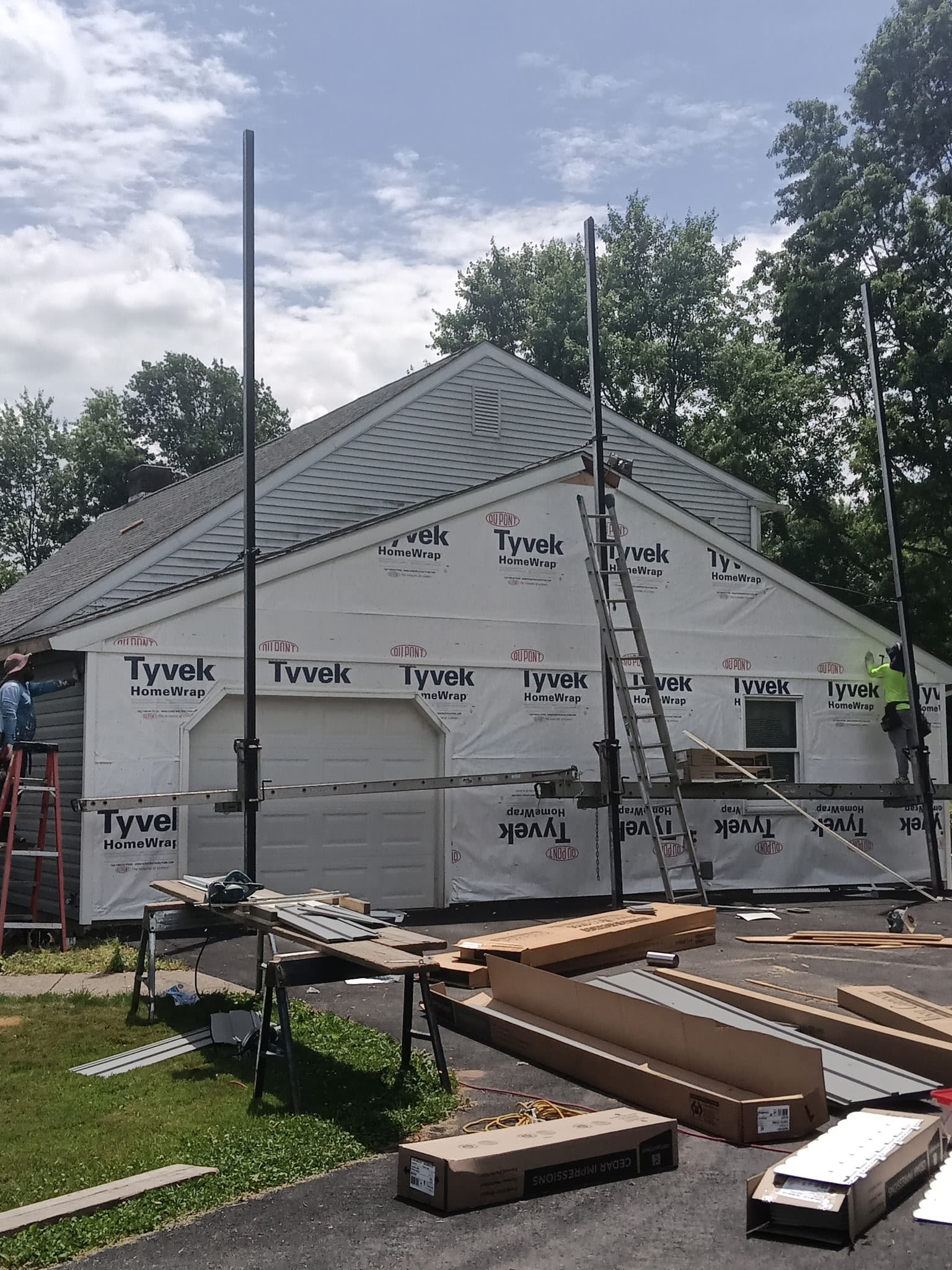
An experienced siding contractor looks past the surface. They check flashing at windows, doors, and roof-to-wall intersections, the condition of trim, soffit, and fascia, how the siding was originally fastened, and whether there are signs of moisture behind the panels. Replacing siding is also the best chance to fix those hidden details properly with new house wrap, flashing, and trim.
What to do next
If you are noticing several of these signs, it is a good time to get a professional opinion before winter weather makes things worse. Learn more about our siding services, get a starting figure with the free Instant Estimate, explore payment options with our financing calculator, or request a free estimate and we will walk the house with you.
Frequently Asked Questions
How do I know if my siding needs to be replaced?
Common signs include warped or buckled panels, soft or rotted spots, cracks and holes, loose or missing pieces, mold or mildew that keeps returning, and moisture damage showing up on interior walls.
Can damaged siding be repaired instead of replaced?
Often, yes, if the damage is limited to a few pieces and the wall behind is dry and sound. When problems are spread across several walls or moisture has reached the sheathing, replacement usually makes more sense.
Does faded siding need to be replaced?
Fading alone is cosmetic and is not a reason to replace siding that is otherwise sound. It becomes a factor when it comes with brittleness, cracking, or other wear.
Can old siding raise heating and cooling bills?
Siding that is loose, cracked, or gapping can let air and moisture into the wall. Rooms that feel drafty near exterior walls can be a clue, though windows, doors, and insulation are often involved too.
Siding done right, the first time
E&K Contracting has served Bucks, Lehigh, and Montgomery County homeowners for over 20 years. Free estimates, no pressure.