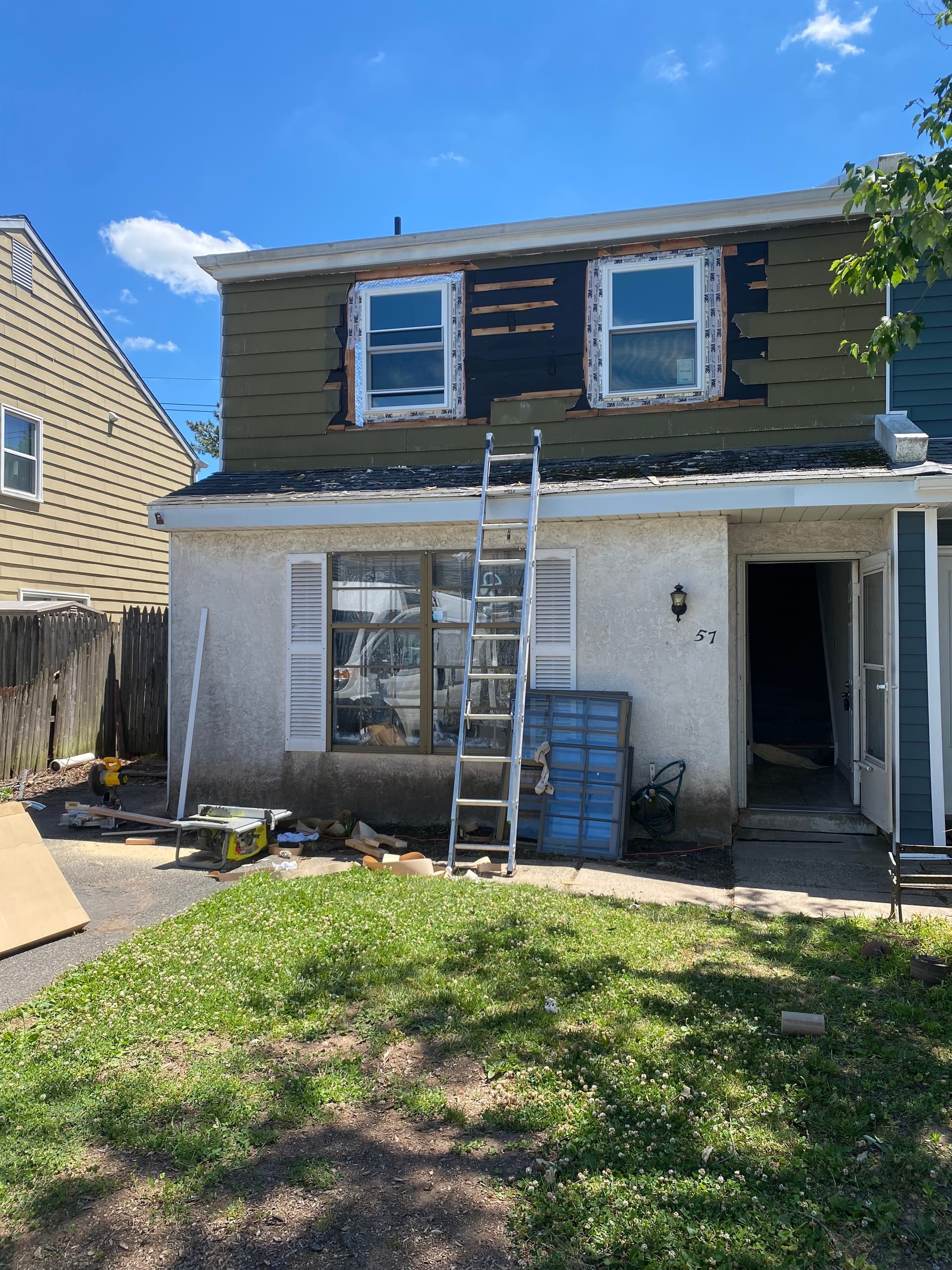
Insert Replacement Windows: What Homeowners Should Know
Jeff Stover
Owner of E&K Contracting with 20+ years of exterior remodeling experience in Bucks, Lehigh, and Montgomery Counties.
Insert replacement windows are a practical option when your existing window frame is still in good shape but the window itself is not doing its job. If you have ever felt a draft near a bedroom window on a cold Doylestown morning, this is usually the first type of replacement worth understanding.
What insert replacement windows actually are
Insert replacement windows are new window units that fit inside your existing frame. The old moving parts come out, the original frame stays in place, and the new unit is secured inside that opening. You may also hear this called a pocket window or retrofit window. In most cases, those terms mean the same basic approach.
This matters because not every window replacement is a full tear-out. Some homes in Bucks, Lehigh, and Montgomery counties have aging sashes, worn seals, or fogged glass, but the surrounding frame is still stable. In that situation, an insert can be the simpler fix.
How an insert window fits into the existing opening
The process is fairly direct. The old sash is removed, the installer checks the frame, and the new unit is set into the existing opening. Because the original frame and much of the surrounding trim stay in place, the job usually involves less disruption to siding, drywall, and interior casing.
That reduced disruption is the main appeal. It is closer to swapping a worn component than rebuilding the whole area around it.
Why homeowners choose inserts
Most homeowners choose inserts for practical reasons. Installation is usually faster. There is often less mess inside the house. Existing trim details can stay intact, which matters if you want to avoid repainting or patching around every opening.
You also get better comfort and efficiency when the old problem is the window unit itself, not the structure around it. But here’s the thing: that only holds true when the original frame is sound. If the frame has rot, water intrusion, or movement, an insert can cover up a bigger issue instead of fixing it.
Insert vs. full-frame replacement: the decision that matters most
This is the first decision that shapes everything else. If you choose the wrong type of replacement, every comparison that follows gets distorted, from product options to labor scope to long-term performance.
An insert replacement keeps the existing frame. A full-frame replacement removes the entire window assembly down to the rough opening. That means full-frame work is more involved, but it also gives you access to problems hidden behind trim or cladding.
When an insert replacement makes sense
An insert replacement makes sense when your existing frame is square, dry, and structurally stable. If the exterior trim is holding up, the flashing is doing its job, and you are not seeing signs of rot or ongoing leaks, an insert is often a sensible choice.
This is also the better fit when you want less disruption to finished surfaces. If your goal is to improve comfort and window performance without changing the size or style of the opening, inserts usually line up with that goal well.
When full-frame replacement is the better fix
The catch is simple: inserts do not solve structural or moisture problems. If you notice soft wood, peeling paint caused by water, staining around the frame, or persistent drafts at the edges of the opening, you need a closer look at the full assembly.
Full-frame replacement is also the better route if you want to change the window size, switch to a different operating style, or correct an older installation that was never flashed or sealed properly. In those cases, keeping the old frame can limit the result.
One tradeoff to understand before you buy
Insert windows reduce the visible glass area slightly because the new frame sits inside the old one. On paper that sounds minor, and in many homes it is. Still, it is a real tradeoff.
If your current windows already have narrow sightlines, you may barely notice. If you have small openings to begin with, the change can matter more. The trick is to weigh that against the easier installation and lower overall project disruption.
What to check before buying insert replacement windows
Before you ask for quotes, it helps to know what actually affects performance and lifespan. Marketing language is easy to find. Useful details take a little more effort.
Frame condition and hidden damage
The condition of the existing frame is the make-or-break issue with insert replacement windows. Check for soft spots, crumbling wood, failed caulk lines, recurring condensation problems, and suspicious patch repairs that look like quick cosmetic fixes. If trim has been repainted over and over in one corner, pay attention.
Hidden damage is common enough that you should expect the possibility of added repair work once an old unit comes out. That is why a low starting quote does not tell you much by itself. If the frame is compromised, the project can change scope quickly.
Energy performance labels that help you compare
Two labels make comparison easier: NFRC and ENERGY STAR. NFRC is the rating label that shows measured performance values. ENERGY STAR is a shorthand way to identify products that meet efficiency standards for a given climate zone.
The two ratings worth checking most closely are U-factor and SHGC. U-factor tells you how well the window resists heat loss. Lower is better. SHGC, short for Solar Heat Gain Coefficient, measures how much solar heat passes through the glass. In Pennsylvania, where heating season matters, these labels help you compare options on the same scale instead of relying on sales language. The U.S. Department of Energy estimates that heat gain and loss through windows accounts for 25% to 30% of residential heating and cooling energy use.
Materials, glass packages, and maintenance
Most quotes will include vinyl, fiberglass, or wood-clad options. Vinyl is common because it is low maintenance and usually the most budget-friendly. Fiberglass often gets attention for long-term stability and low upkeep. Wood-clad windows can appeal if appearance is a high priority, but they usually ask more of you over time.
Glass package choices matter just as much as frame material. Low-E coatings help control heat transfer, and multi-pane insulated glass improves comfort. If you compare two windows with very different glass packages, the frame alone will not explain the performance gap.
What insert replacement windows cost and why prices vary
Window pricing can seem inconsistent because published numbers often describe the unit only, while real proposals include labor, site conditions, disposal, finishing details, and repair allowances.
Typical price ranges per window and per project
Published insert-only numbers are often much lower than actual installed pricing. In real-world projects, homeowners commonly see a broader installed range, and multi-window jobs often land far above the cost of the units alone. One recent pricing roundup put the average project cost in the same general range many homeowners report for a mid-sized replacement job.
That said, cost discussions only help if you are comparing the same scope. A basic insert installation is not the same thing as a full-frame replacement with trim work and hidden repairs.
What changes the final price
Several factors move the number up or down: window size, custom shapes, upper-story access, glass upgrades, frame material, and labor complexity. Oversized or specialty units usually cost more to order and more to install. Second-story work can take longer and require more setup.
Frame repairs also change the picture fast. If rot or water damage shows up during removal, that repair has to happen before the new window goes in. The same source notes that hidden damage is one of the biggest reasons final costs rise beyond the original quote.
How to compare quotes without getting tricked by the lowest number
A useful quote should list window count, exact sizes, operating style, product line, glass package, installation scope, disposal, trim or cladding work, and warranty details. It should also make clear whether the proposal is for insert replacement or full-frame replacement. If that is vague, the quote is not ready to compare.
Look for an allowance or clear language around rot repair as well. You want to know what happens if the installer opens the wall and finds a problem. A lower number that excludes predictable issues is not really lower. It is just incomplete.
Best choices for different homeowner priorities
The best insert window is not the one with the longest feature list. It is the one that fits your house, your goals, and the condition of the opening.
If your priority is lower upfront cost
Focus on standard sizes, proven frame materials, and good performance labels. In many homes, a solid vinyl insert with a sensible glass package gives you the best value. Skip upgrades that sound impressive but do not change day-to-day comfort in a noticeable way.
Where you should not cut corners is installation quality. A modest window installed well usually beats a premium unit installed poorly.
If your priority is energy efficiency and comfort
Look closely at insulated frames, Low-E glass, tight air sealing, and verified performance labels. Draft control matters in winter, and solar heat control matters in summer. If a room gets harsh afternoon sun or always feels colder than the rest of the house, the glass package deserves extra attention.
Efficient windows can make a room feel more even from wall to wall, not just lower utility use. That comfort difference is often what homeowners notice first.
If your priority is long-term durability
Fiberglass often comes up for good reason. It is stable, low maintenance, and widely seen as a strong long-term option. Some market reporting points to growing interest in fiberglass-framed windows for durability and thermal performance.
Still, a well-made vinyl insert can be a practical choice, especially when the frame is sound and the installation is careful. Material matters, but fit and sealing still decide how the window performs in your home.
If your priority is curb appeal or resale
Try to keep the new window style consistent with your home’s architecture. Match grille patterns, frame color, and sightlines as closely as possible. A replacement should look like it belongs there, not like it came from a different house.
Efficient replacement windows can help resale appeal. But the visual fit still matters. Clean proportions usually age better than trend-driven choices.
Common mistakes to avoid before you sign a contract
Most window problems start before installation day, usually with a bad assumption or an incomplete quote.
Choosing an insert window for a bad frame
An insert is not a repair for rot, softness, or water intrusion. If the frame is failing, covering it up usually delays a larger repair. The old frame has to be worth keeping, or the whole idea stops making sense.
Assuming the most expensive window is the best one
Price alone does not tell you which window will perform better. Some less expensive models outperform pricier ones in real testing, especially when air leakage and weather resistance are the main concern. Compare ratings, materials, warranty terms, and installation scope side by side.
Overlooking installation details and warranty limits
Fit, shimming, air sealing, and weatherproofing matter just as much as the product itself. A high-quality unit installed loosely can leak air, bind during operation, or fail early. Warranty terms also vary by product and tier, so check what is covered, what is prorated, and what installation issues may be excluded.
Skipping one simple next step
Before requesting quotes, check one or two windows yourself. Press gently on the sill or lower corners for soft spots. Notice whether you feel air movement near the trim. Look for gaps, staining, or paint failure. That small step gives you a clearer starting point and helps you tell whether insert replacement is even the right fix.
Frequently Asked Questions
Are insert replacement windows the same as pocket windows?
Yes, in most cases those terms describe the same kind of installation. The new window fits inside the existing frame after the old sash is removed.
How do you know if your home can use insert replacement windows?
The existing frame needs to be solid, dry, square, and free of rot or movement. If you have water damage, soft wood, or major air leaks around the frame, full-frame replacement is often the better fix.
Do insert windows make the glass area smaller?
Usually, yes. Because the new frame sits inside the old one, you lose a small amount of visible glass. In many homes the change is minor, but it is worth noticing before you buy.
Are insert replacement windows good for energy efficiency?
Yes, if the frame is in good condition and the new unit is installed tightly. Good glass, low air leakage, and proper sealing have a direct effect on comfort and efficiency.
What should a window quote include?
A clear quote should show the number of windows, exact sizes, style, product line, glass package, installation method, trim or finish work, disposal, and warranty details. It should also state whether the work is insert replacement or full-frame replacement.
Windows done right, the first time
E&K Contracting has served Bucks, Lehigh, and Montgomery County homeowners for over 20 years. Free estimates, no pressure.