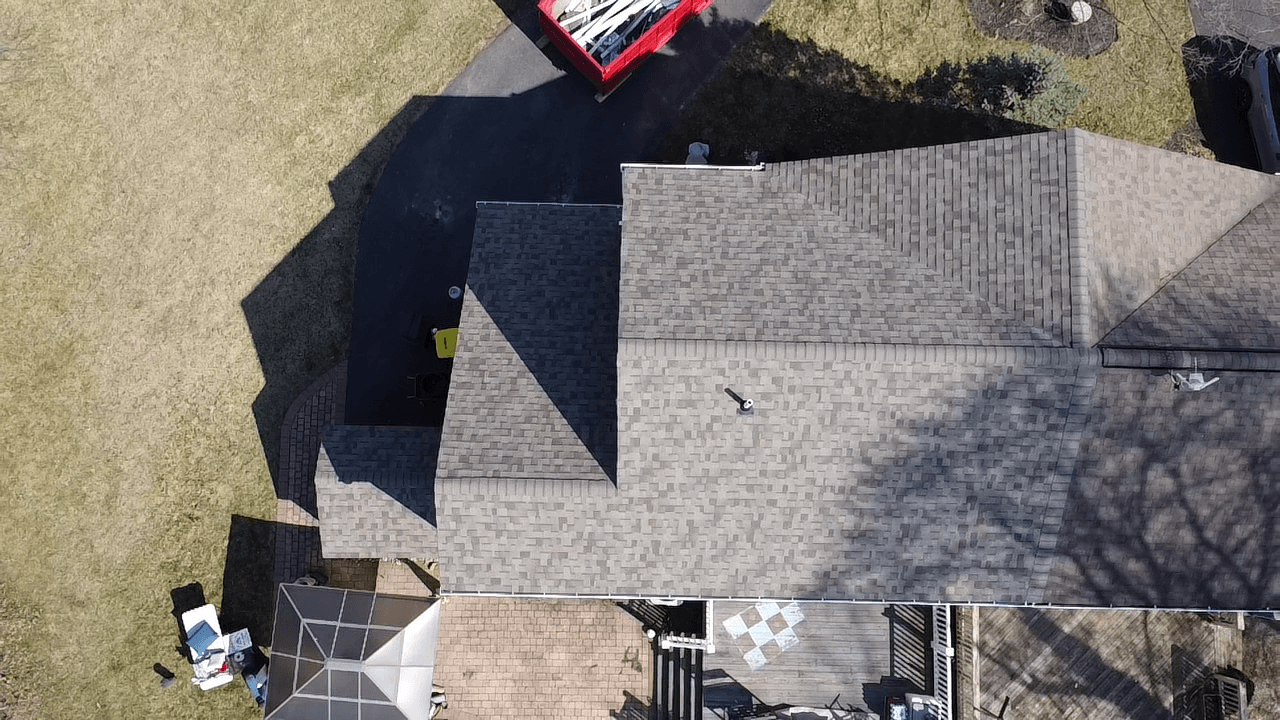
Gutter Size Chart: Pick the Right Width for Your Roof
Jeff Stover
Owner of E&K Contracting with 20+ years of exterior remodeling experience in Bucks, Lehigh, and Montgomery Counties.
A gutter size chart shows how to match gutter width and downspout capacity to the amount of water your roof sheds. If water pours over the front edge during a hard summer storm, the problem is often sizing, layout, or both. The useful part is simple: gutter size is not guesswork when you look at the right inputs.
What a gutter size chart actually tells you
A gutter size chart is a decision tool. It helps you compare roof runoff against gutter width, gutter shape, and downspout capacity so you can choose a system that can carry water without spilling over.
That matters because gutters do one job: move roof water away from your fascia, siding, foundation, and walkways. When a section is too small, water overshoots the gutter or backs up at the outlet. When a section is larger than needed, you usually get extra material and a bulkier look without solving the real issue.
Here’s the thing: most overflow problems do not come from one bad number. A chart only works when you use the roof area feeding one gutter run, the steepness of that roof, local storm intensity, and the way water exits through downspouts.
Standard gutter sizes for homes
Most homes use 5-inch or 6-inch gutters. Less often, you will see 4-inch gutters on small or older setups, and 7-inch systems on unusually large or demanding residential roofs. In most cases, “size” refers to the width across the top opening.
That sounds straightforward, but profile changes capacity. A 6-inch gutter in one shape may handle water differently than a 6-inch gutter in another shape. So when you compare sizes, you also need to compare shape.
5-Inch Vs. 6-Inch gutters
A 5-inch gutter works well on many homes with moderate roof sections, ordinary pitch, and a decent number of downspouts. If your roof sends a manageable amount of water to each run, this size is often enough.
A 6-inch gutter makes more sense when roof sections are larger, rooflines are steeper, or one run takes concentrated water from valleys or upper roofs. It is also a common fix when a house has repeated overflow during strong downpours even after the gutters are clear and properly sloped.
This is the direct claim worth keeping in mind: if your gutters regularly spill in heavy rain, moving from 5-inch to 6-inch is often more practical than trying to force the same size to do more work.
K-style, half-round, and box gutters
K-style gutters are the most common on houses. The front face looks more angular, and the shape gives good capacity for the size. That is one reason K-style is the default choice on many replacement projects.
Half-round gutters look like a cut pipe. They are common on older homes and certain architectural styles. At the same nominal width, half-round gutters often carry less water than K-style because the shape gives you less usable interior space.
Box gutters are a different category. Some are built into the roof edge, and some are used where higher water volume is expected. Research on commercial applications notes that box gutters are often chosen because they can hold more water than a similarly sized K-style profile. On most houses in Bucks, Lehigh, and Montgomery counties, you are usually comparing 5-inch or 6-inch K-style systems, not true box gutters.
How to use a gutter size chart
A gutter size chart is easiest to use when you think of each gutter run as its own mini drainage system. Your whole house does not drain evenly. One side may be simple. Another may collect runoff from a valley, dormer, and upper roof all at once.
The chart logic is basic: more roof water requires more carrying capacity. Roof area matters, but pitch, storm intensity, and outlet layout can push a borderline setup into the next size up.
Measure the roof area draining to each gutter run
Start with the roof section feeding one specific gutter run. Do not size by the total square footage of your house. A small area over a garage does not put the same demand on a gutter as a long rear roof section with two valleys emptying into it.
Valleys, dormers, and multi-level roof sections are the catch. They can dump extra water into one concentrated spot, much like several garden hoses aimed into the same channel. A chart is only useful if you account for those collection points.
Factor in roof pitch
Roof pitch is simply how steep the roof is. A steeper roof sheds water into the gutter faster than a low-slope roof, which increases the load during a hard storm.
Many sizing methods use a pitch multiplier. You do not need to turn this into an engineering exercise to get the point. Steeper roofs act bigger from a drainage standpoint, even if the measured footprint stays the same.
Check local rainfall and storm intensity
Local weather belongs in the decision. Average annual rainfall is less useful than the short, intense downpours that actually test your gutters.
In southeastern Pennsylvania, sizing for calm rain alone misses the real problem. A chart works better when you think about the kind of summer storm that sends water off the roof all at once. Research on roof drainage also shows that flowrate and slope both affect gutter water depth, which is another way of saying local storm conditions matter.
Match the gutter size with downspout capacity
A gutter and downspout work as a pair. A larger gutter can still overflow if the downspouts are too small, too few, or too far apart.
That is why changing only the trough size does not always fix the problem. Water has to leave the run fast enough, especially near valleys and long roof edges.
Residential gutter size chart by roof conditions
A residential gutter size chart should help you sort common roof conditions into likely gutter sizes. It is a starting point, not a full design document.
In general, moderate roof sections with ordinary pitch often fit 5-inch K-style gutters. Larger roof sections, steeper pitches, complicated valleys, or long runs with limited outlets often push the recommendation to 6-inch gutters and larger downspouts.
Quick sizing guide for typical homes
If one gutter run handles a modest roof section with a standard layout, 5-inch gutters are commonly used. If one run handles a large roof plane, receives water from upper sections, or has noticeable overflow history, 6-inch gutters are often the better match.
The trick is to think run by run, not house by house. A home can have one side that works fine with 5-inch gutters and another side that really wants 6-inch capacity.
When to size up
Certain conditions point clearly toward a larger system. Steep roof pitch is one. Long gutter runs are another. Valleys that dump into one section, limited places for downspouts, repeated clogs from tree debris, and chronic overflow after cleaning also belong on that list.
If water regularly runs over the front edge during storms, treat that as a sign to review capacity, not just maintenance. Persistent overflow usually means the current setup is undersized, poorly drained, or both.
Matching existing gutters during replacement
If you are replacing part or all of a gutter system, measure the top opening of the existing gutter to identify the current size. A 5-inch K-style and a 6-inch K-style can look similar from the ground, so guessing by eye is not very reliable.
Matching the old size is fine if the old system handled water well and the replacement is simply due to age or wear. If the old system overflowed, backed up near corners, or struggled at valleys, repeating the same size often repeats the same problem.
Downspout sizing and placement matter just as much
You can have the right gutter width and still get poor performance if water cannot exit efficiently. This is where many sizing shortcuts fall apart.
Think of a long gutter run like a sink. If the drain opening is too small, water backs up no matter how wide the sink is.
Common downspout sizes
The downspout sizes you will usually see on homes are 2x3-inch and 3x4-inch rectangular downspouts, along with some round options. Larger downspouts move more water and are commonly paired with 6-inch gutters.
The size relationship matters. A bigger trough feeding a small outlet can create a bottleneck, especially during fast roof runoff.
How many downspouts you need
The number of downspouts depends on gutter length, the roof area feeding that run, and where outlets can be placed. One long run with too few outlets has a built-in flow problem.
Guidance used in drainage references also warns against stretching outlet spacing too far. One commonly cited rule limits downpipes to no more than 18 m apart where possible. Even without doing conversions on paper, the idea is clear: long distances between outlets make the gutter do more work.
Placement problems that cause overflow
Placement issues show up in predictable spots. Valleys may dump water near one outlet and overload that area. Downspouts may be too far from the high-flow section. Corners may collect water and debris. Outlets may clog even when the rest of the gutter looks clear.
If overflow happens in one repeated location, pay attention to layout, not just total size. A well-sized system can still fail at one bad outlet location.
Other factors that change the right gutter size
Two homes with the same roof area can need different gutter setups because installation details and regional conditions change performance. That is why simple online charts can only get you so far.
Material and seam style
Aluminum is the most common residential gutter material, and aluminum gutters lead the market for good reason. They are light, practical, and widely available. Steel is stronger but heavier. Vinyl is lightweight and common in do-it-yourself projects, though it can age differently in sun and temperature swings. Copper is usually chosen for appearance and long service life.
Seam style matters too. Seamless gutters are popular because fewer joints usually mean fewer leak points. On a replacement project, that can matter as much as nominal size.
Gutter slope and maintenance
Gutters need enough slope to move water toward the outlet, but not so much that the line looks uneven along the fascia. If the slope is too flat, water can pond. If debris builds up, even a properly sized gutter starts acting too small.
That comes up often under mature trees, which are common across parts of Bucks and Montgomery counties. Leaves and seed debris reduce flow space, slow drainage, and crowd the outlet.
Local roof and drainage challenges
Older homes often have additions, layered rooflines, and awkward drainage paths that were not part of the original design. One roof section may empty onto another, or a valley may send water toward a short run with limited outlet options.
That is common across southeastern Pennsylvania housing stock. The catch is that a standard size that works on a simple ranch may not work on an older home with dormers, additions, and concentrated runoff.
Common gutter sizing mistakes
Most gutter sizing mistakes come from one shortcut: choosing by house size alone and ignoring the rest of the system.
“My house is small, so 5-Inch gutters are enough”
Small house footprint does not guarantee small runoff demand. A steep roof, a heavy valley, or a multi-level section can place a large load on one run even when the overall house is not especially large.
“Bigger is always better”
Bigger is not automatically better. An oversized system can look out of scale and add material without fixing a poor downspout layout or bad slope. The goal is balanced capacity from the roof edge to the discharge point.
“If gutters overflow, they just need cleaning”
Sometimes that is true. Clogs are common. But if the overflow keeps happening after cleaning and after confirming the outlets are open, the issue usually goes deeper than debris.
Frequently Asked Questions
Is a 5-Inch gutter big enough for a 2,000-Square-Foot house?
That number alone does not tell you enough. You need to look at the roof sections draining to each run, the roof pitch, any valleys or upper roofs feeding the area, and the downspout layout. A house of that size can work with 5-inch gutters in one case and need 6-inch gutters in another.
Can you use 6-Inch gutters with smaller downspouts?
You can, but it often creates a bottleneck. The gutter may catch the water, but the smaller outlet may not move it away fast enough during a hard storm. Matching gutter and downspout capacity is usually the safer approach.
Do you need bigger gutters in heavy rain areas?
Yes, local storm intensity can justify sizing up. That is especially true on steep roofs, long gutter runs, and rooflines with valleys that concentrate runoff into one section. Local weather should be part of the chart decision, not an afterthought.
What should you check first if water pours over the edge?
Start with clogs in the gutter and outlet. Then check whether the downspout is flowing freely, whether the gutter still slopes toward the outlet, and whether overflow happens at one trouble spot or across the run. After that, compare the current setup to a gutter size chart. Try one simple check before making a repair decision: measure one gutter run and count its downspouts.
Gutters done right, the first time
E&K Contracting has served Bucks, Lehigh, and Montgomery County homeowners for over 20 years. Free estimates, no pressure.