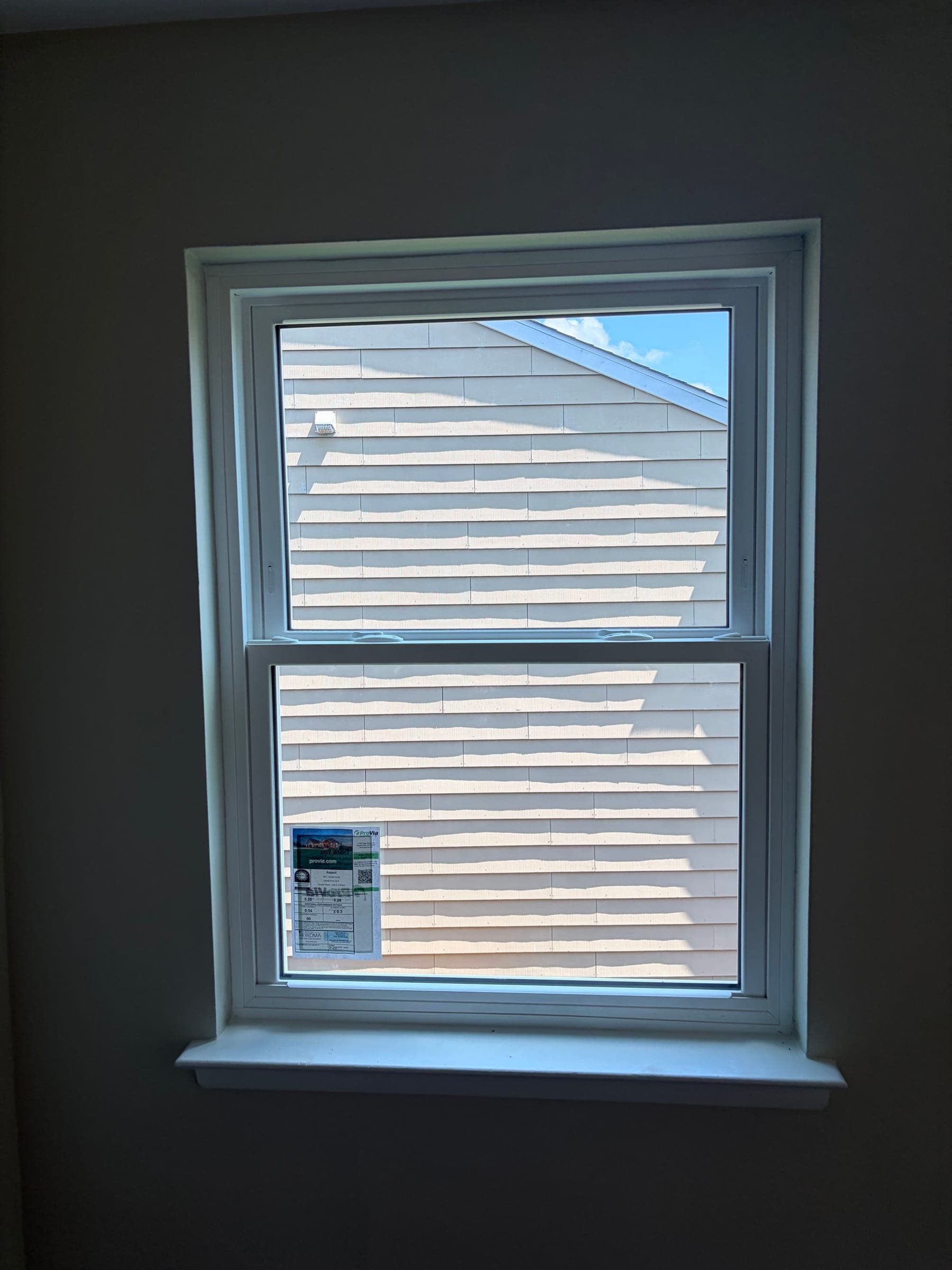
Full-Frame Window Replacement: Is It Worth It?
Jeff Stover
Owner of E&K Contracting with 20+ years of exterior remodeling experience in Bucks, Lehigh, and Montgomery Counties.
Full frame window replacement is worth it when the old window frame is part of the problem, not just the glass or sash. If your windows feel drafty, show signs of water damage, or sit in an older opening that has seen years of patchwork, this is usually the more complete fix.
What full-frame window replacement actually means
Full-frame window replacement means the entire existing window comes out, including the frame, sash, and trim down to the rough opening. The rough opening is the framed hole in the wall where the window sits. Once that old assembly is removed, the opening can be inspected, repaired, sealed, and fitted with a new unit.
That is different from a smaller swap where part of the old frame stays in place. Here’s the thing: that difference affects almost everything else, including labor, finish work, timeline, and what problems can actually be fixed.
Full-frame vs. insert replacement
An insert replacement, also called a pocket replacement, slides a new window into your existing frame. That approach keeps more of the original structure in place, which usually means less disruption and less finish work.
A full-frame replacement starts fresh. The old frame does not stay. That matters because an insert only works well when the existing frame is solid, dry, square, and properly sealed. If the frame has rot, movement, or old water damage, reusing it can leave the real issue behind.
This is the main tradeoff. Insert replacement is a lighter-touch option. Full-frame replacement is the deeper repair.
Why this choice matters in an older pennsylvania home
In Bucks, Lehigh, and Montgomery counties, many homes have older wood windows, layered trim repairs, and openings that have dealt with decades of weather. By the time a window starts sticking on a cold morning or staining shows up below the stool, the issue may extend beyond the visible unit.
Older openings can hide soft wood, air leaks, failed flashing, or framing that has shifted slightly over time. Flashing is the water-management layer around the opening that helps direct water away from the wall. If that detail was done poorly years ago, a new insert may improve the look of the window without fixing how water and air move around it.
When full-frame replacement is usually worth it
Full-frame replacement is usually worth it when your existing frame or opening has signs of failure, or when you want a long-term fix instead of a surface-level swap. That is the direct answer.
If the frame is compromised, reusing it just limits what can be improved. If the frame is sound and the opening is in good shape, an insert may be enough.
Signs your existing frame should not be reused
Some warning signs are easy to spot. Soft wood along the sill, visible rot, water stains on surrounding trim, peeling paint that keeps coming back, and drafts around the casing all suggest the opening needs a closer look.
Operation problems matter too. If a window no longer opens cleanly, will not lock squarely, or has a frame that looks slightly twisted, the opening may be out of square. In that case, dropping a new insert into the old frame can be like putting a new door on a bent hinge. It may fit, but not as well as it should.
The catch is hidden damage. Once the old unit is removed, problems sometimes appear in the sill area or side framing that were not visible from inside the room.
Cases where a full tear-out solves more than a new sash
A full tear-out makes more sense when window problems keep returning. If you have recurring leaks, repeated trim damage, failed caulk lines, or signs that water is getting behind the cladding, replacing only the moving parts of the window is often too limited.
This also applies when the surrounding exterior is being updated. If your siding or trim is already being replaced, full-frame window work is often easier to coordinate because the surrounding materials are already being opened up. The same is true when an older opening needs repair before a new unit can be installed correctly.
When an insert replacement may be enough
An insert replacement can be a practical choice when the existing frame is dry, stable, square, and sealed well. If the old frame is in good condition and your main goal is to replace worn sashes or improve glass performance without disturbing much trim, that approach can make sense.
Not every window in your house needs the same treatment. One opening may need full-frame replacement because of damage, while another can accept an insert because the frame is still performing well.
The real benefits you get from full-frame replacement
The extra work of full-frame replacement pays off in access, repair options, and overall fit. You are not just buying a new piece of glass. You are getting the chance to reset the whole opening.
Better access to hidden damage and structural repairs
When the old unit is fully removed, the rough opening can be inspected directly. That makes it possible to find rot, replace damaged framing, and correct moisture-related problems before the new window goes in.
This is one of the strongest reasons to choose full-frame replacement. A finished window only performs as well as the opening around it. If the surrounding wood is deteriorated or the sill has been absorbing water for years, covering it up does not solve much.
Improved air sealing, insulation, and weather protection
Full-frame replacement also gives you a better opportunity to air seal and insulate around the opening. New flashing, fresh sealants, and insulation can all be installed as part of the job. That often helps reduce drafts and improves comfort near the window.
Some sources note that full-frame replacement includes re-flashing and added finish work that insert jobs usually avoid. That added scope is exactly why this method can address weather protection more thoroughly.
If energy performance matters, ask about whole-window ratings, not just the glass. U-value measures how much heat passes through the window. SHGC, or solar heat gain coefficient, measures how much solar heat gets through. Lower or higher is not automatically better in every case. The right fit depends on your home, orientation, and local code.
A cleaner look and more design flexibility
A full-frame job can also improve appearance. Because the entire assembly is replaced, you can often get cleaner interior and exterior lines, updated trim details, and better alignment with surrounding finishes.
In some cases, this method also gives you more flexibility to change window style or adjust the opening. It is not unlimited, but it gives more freedom than working inside an existing frame. Another practical benefit is that insert windows can slightly reduce glass area because they sit inside the old frame, while insert replacements can let in less light than a full-frame approach.
What it costs and why prices vary so much
Full-frame replacement costs more because the job includes more than the new window itself. You are paying for removal, disposal, opening inspection, possible repairs, sealing, flashing, insulation, and finish work.
That broader scope is why two quotes can look far apart even when the windows seem similar on paper.
Typical per-window and whole-project price ranges
Window replacement projects often land in a wide range overall because every opening can be different. Industry research shows that many projects cluster around a substantial whole-home investment, and single window replacement costs vary widely depending on size, material, and installation complexity.
Material also changes the installed range. National replacement guides show different installed ranges for vinyl, fiberglass, and wood, with full-frame projects usually trending higher within those bands.
For your own planning, the better approach is to think in layers, not averages: the window unit, the installation method, the condition of the opening, and the finish work around it.
What adds to the price
Price moves up with larger windows, more complex shapes, upgraded glass packages, and harder access such as upper-story openings. Trim details, siding cut-back, masonry conditions, and interior finish repairs can also add labor.
Hidden damage is another major variable. Once an older window is removed, the crew may find soft wood, old insulation gaps, or failed water-management details that need correction before the new unit can be installed properly.
If your home was built before lead-safe renovation rules changed, painted surfaces may also require more careful containment and cleanup during tear-out.
Why line-item quotes matter
Line-item quotes matter because the bottom-line number does not tell you what is included. A shorter quote can leave out flashing, disposal, trim replacement, insulation, or repair allowances, then add those items later as change orders.
Ask for labor, materials, disposal, trim, flashing, and repair contingencies to be separated clearly. That kind of detail makes it easier to compare one proposal to another on scope, not just price.
What the installation process looks like
Full-frame replacement is more involved than an insert job, but the sequence is straightforward. Knowing the steps helps you judge how prepared a contractor is and what disruption to expect.
Step-by-step: from removal to finished opening
The old window and frame are removed first. After that, the rough opening is inspected for damage, movement, or moisture issues. If repairs are needed, they happen before the new unit is installed.
Once the opening is ready, the new window is set, secured, flashed, sealed, and insulated. Interior and exterior trim are then completed or replaced as needed. Some openings finish cleanly in one pass. Others need adjacent patching, paint touch-up, or exterior repairs.
How long full-frame replacement usually takes
The installation time depends on how many windows are involved, whether units are custom ordered, and what condition each opening is in. The actual on-site work may move quickly on a straightforward opening, but the full timeline from measuring to final completion is usually much longer than homeowners expect.
Research on replacement project planning shows a long project timeline, with much of the time spent before installation begins. Ordering, scheduling, inspections, and finish coordination all add time.
What happens to siding, trim, drywall, or paint
This is where surprises tend to show up. Some full-frame projects require exterior trim replacement, siding cut-back, or localized cladding repairs. Inside, you may need casing adjustments, drywall patching, or paint touch-up around the opening.
That does not mean every project turns into a wall repair job. It means the surrounding materials need to be part of the plan from the start, especially in older homes where windows have been patched more than once.
How to decide if It’s the right choice for your home
A good decision usually comes down to condition, budget, and how complete a solution you want. If your goal is to solve underlying opening problems, full-frame replacement has a clear advantage.
A simple decision checklist
Start with the frame itself. Is it sound, dry, and square? Do you see stains, rot, drafts, or repeated trim issues? Are you already planning siding, trim, or other exterior work that would make a full tear-out easier to bundle?
Then look at your goal. If you want the least expensive path and the frame is in good condition, an insert may be enough. If you want to correct hidden issues and reset the opening properly, full-frame replacement is usually the better fit.
Budget now vs. value over time
The tradeoff is simple. Insert replacement usually lowers the upfront scope. Full-frame replacement usually gives you a more complete repair.
That does not make one option automatically better. It means you should decide whether you want to minimize initial disruption or reduce the chance of revisiting surrounding window problems later. In many older homes, doing related work twice is what gets expensive.
Best fit for older homes, damaged openings, and major remodels
Full-frame replacement tends to make the most sense in older homes, damaged openings, and larger exterior remodels. In southeastern Pennsylvania housing stock, that often means homes with aging wood frames, signs of water entry, or windows that have been repaired repeatedly over time.
It is also a strong fit when you want to change style, improve alignment, or coordinate the work with siding, trim, doors, or other exterior updates.
Common mistakes to avoid before you sign a contract
The biggest mistakes usually come from assuming every quote covers the same work. It rarely does.
Choosing based on price alone
A low number can look attractive, but it may exclude disposal, trim work, flashing, or repair allowances. Better value comes from a quote that reflects the actual condition of the opening and the full installation scope.
Performance matters too. Testing has shown that window performance does not always track with price. Paying more only makes sense if you know what you are getting.
Assuming every opening in your house needs the same solution
Each opening can be different. One window may sit in a dry, stable frame, while another on the same wall has hidden rot or movement. Treating the whole house as one identical package can lead to overbuying in some places and under-fixing in others.
A mixed approach is sometimes the most sensible one.
Not asking about permits, code requirements, and performance specs
Ask how local code, energy requirements, and product ratings affect the recommendation. You do not need a long technical lecture. You do need clear answers on U-value, SHGC, air sealing details, and whether the proposed work changes the opening enough to affect permit requirements.
That helps you compare windows as building components, not just as finish items.
Questions to ask before hiring a window contractor
Before you sign anything, slow the conversation down and make the scope specific. A good contractor should be able to explain the why behind the recommendation, not just the product being installed.
What exactly is included in this quote?
Ask for a breakdown of tear-out, disposal, trim, insulation, flashing, finish work, and repair allowances. If one quote sounds much lower than another, the difference may be scope rather than value.
How will hidden rot or framing damage be handled?
Ask how problems are documented once the opening is exposed, how change orders are priced, and what happens if framing repairs are needed before the new unit can go in. Hidden damage is common enough that the process should be clear before work starts.
Is full-frame replacement recommended for every window, or only some?
A window-by-window explanation is better than a blanket answer. If every opening gets the same recommendation without a condition-based reason, take a closer look at that estimate.
What’s One opening you should inspect first?
Start with one problem window. A drafty front bedroom window after a cold Doylestown morning is a good example because it gives you a real-world opening to inspect for air leaks, trim condition, and frame damage. That first inspection often tells you whether the issue is isolated or repeated across the house.
Frequently Asked Questions
Does full-frame window replacement improve energy efficiency more than an insert?
Often, yes, but the improvement comes from the whole opening, not just the glass. Full-frame replacement allows new sealing, insulation, and flashing around the unit, which can help if the old frame is leaking air or handling water poorly.
Is full-frame replacement always the best option for old windows?
No. If the existing frame is in good condition, dry, square, and well sealed, an insert can still be a sound choice. Full-frame replacement makes the most sense when the frame or opening has problems, or when you want a more complete reset.
Will full-frame replacement damage interior walls or exterior siding?
Not necessarily, but surrounding materials may need some adjustment or repair. Depending on how the old window was installed, the work can involve trim removal, siding cut-back, drywall patching, or paint touch-up near the opening.
Can you mix full-frame and insert replacements in the same house?
Yes. That is often the practical solution in homes where some openings are sound and others show damage or movement. The right installation method should match the condition of each opening, not force the same approach everywhere.
Windows done right, the first time
E&K Contracting has served Bucks, Lehigh, and Montgomery County homeowners for over 20 years. Free estimates, no pressure.