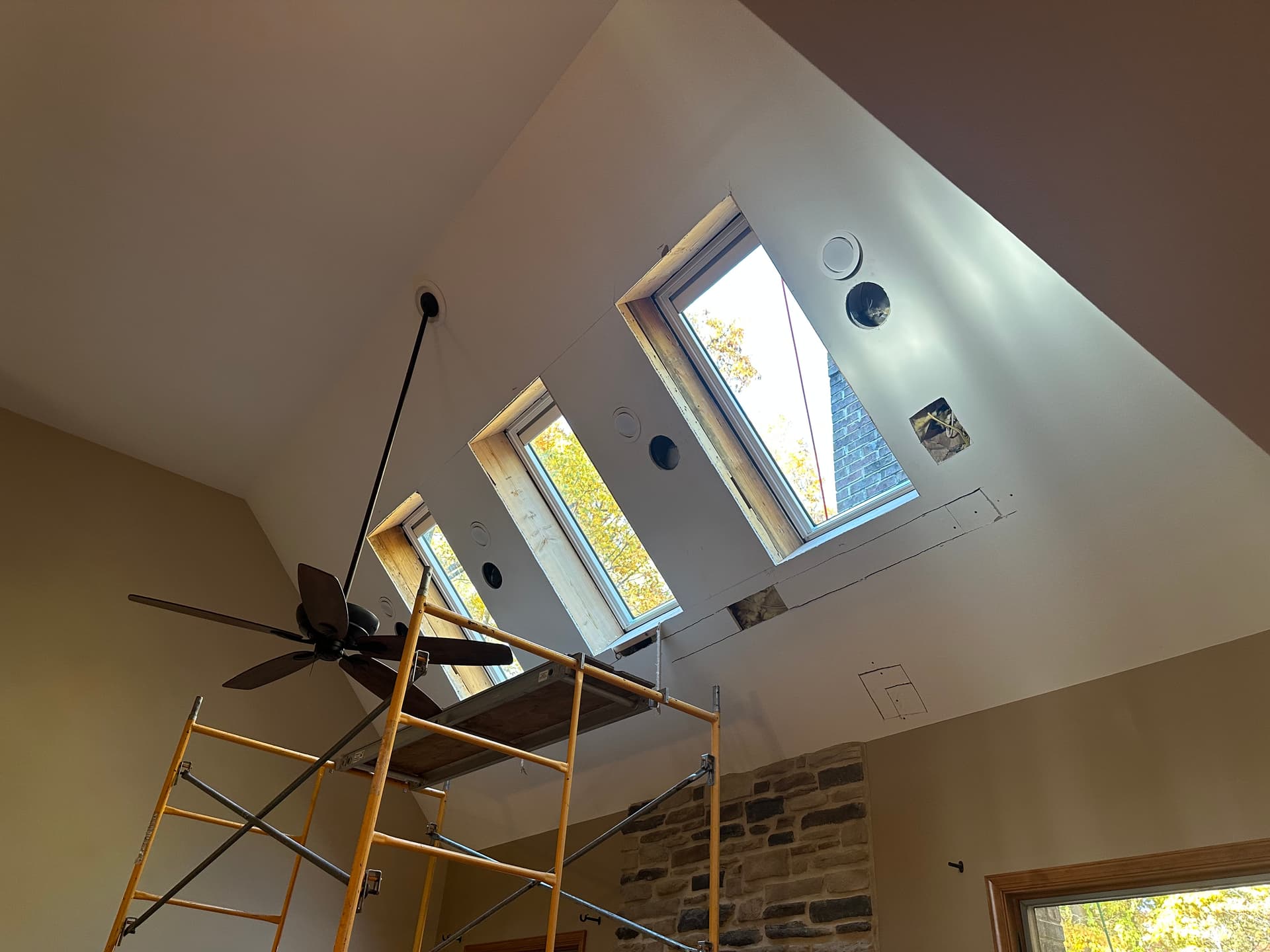
Fixed vs Vented Skylights: Which Is Right for Your Room?
Jeff Stover
Owner of E&K Contracting with 20+ years of exterior remodeling experience in Bucks, Lehigh, and Montgomery Counties.
When you add or replace a skylight, the first decision is whether it should open. A fixed skylight brings in daylight. A vented skylight brings in daylight and lets out heat and humidity. Both have a place, and the right choice depends on the room.
What a fixed skylight is
A fixed skylight is a sealed window in the roof. It does not open. Its job is to bring natural light into a space that would otherwise feel dark, such as a hallway, stairwell, or room with few wall windows.
Advantages of fixed skylights
- Simple design. With no moving parts, there is nothing to operate or adjust.
- Clean look. Fixed units have a simple frame that blends into the ceiling.
- Good fit for hard-to-reach spots. High ceilings and places you would never open anyway are natural candidates.
- Generally a lower investment than a vented unit of similar size.
Limitations of fixed skylights
A fixed skylight cannot help with ventilation. In a room that collects heat or humidity, it only adds light. On sunny summer days, it can also add heat unless you pair it with a shade or choose glazing that helps control heat gain.
What a vented skylight is
A vented skylight opens to let air move. Because warm air rises, opening a skylight near the ceiling gives hot, humid air a natural way out. On mild days, that can help cool a room and freshen the air.
Advantages of vented skylights
- Ventilation. Let out steam from a shower, cooking smells from the kitchen, or heat from an upper floor.
- Natural cooling. On pleasant days, opening a skylight and a lower window can create a gentle air flow through the house.
- Condensation control. Ventilation can reduce the humidity that leads to condensation on cold glass.
- Flexibility. You get daylight year-round and fresh air when you want it.
Limitations of vented skylights
Vented skylights involve more parts, such as hinges, seals, and an operator, and they are typically a larger investment than fixed units. They also need to be opened and closed, which is where the operating options come in.
Velux venting options
E&K installs Velux skylights, which come in fixed versions and in vented versions with several ways to operate them.
Manual venting
Manual vented skylights open with a handle or, for higher ceilings, a telescoping control rod. They are a straightforward choice for skylights within reach.
Electric venting
Electric vented skylights open and close with a remote or wall control. They are wired to the home's electrical system, which makes them a convenient option for high or hard-to-reach skylights.
Solar-powered venting
Velux also offers a solar-powered venting option. A small solar panel charges a battery that powers the opening motor, so no electrical wiring to the skylight is needed. That can make it a practical choice when running wiring would be difficult.
Electric and solar-powered Velux vented skylights include a rain sensor designed to close the skylight automatically when rain is detected.
Shades for either type
Both fixed and vented Velux skylights can be paired with shades. Light-filtering shades soften daylight, and blackout shades darken a room for sleep. Velux offers manual, electric, and solar-powered shade options. Shades also help manage heat on sunny days.
Which rooms suit each type
Bathrooms
Vented skylights are often the best fit. They let out steam and humidity, which can help with moisture and condensation, and they provide privacy with natural light.
Kitchens
A vented skylight can let out cooking heat and odors while brightening work surfaces.
Bedrooms and upper floors
Upper floors tend to trap heat in Pennsylvania summers. A vented skylight paired with a blackout shade gives you light, ventilation, and the ability to darken the room.
Hallways, stairwells, and closets
Fixed skylights are usually a good fit here. These spaces need light more than ventilation, and the skylight may be out of easy reach.
Living rooms and family rooms
Either type can work. If the room gets hot in the afternoon, a vented unit with a shade gives you more control. If you just want daylight, a fixed unit keeps things simple.
Common mistakes when choosing
Choosing fixed to save on a bathroom skylight
A fixed skylight in a bathroom brings in light but does nothing for steam. On cold days, warm humid air rises straight to the glass, which can lead to condensation dripping back into the room. A vented unit usually makes more sense there.
Putting a manual vented skylight out of reach
A manual skylight that sits above a tall vaulted ceiling tends to stay shut, because opening it is a chore. If you will not reach it easily, an electric or solar-powered venting option is more likely to get used.
Forgetting about heat
A skylight facing the afternoon sun can add warmth to a room in summer. Shades and glazing choices both help, and a vented unit lets you release built-up heat near the ceiling.
Mixing styles in one room without a plan
If you are installing more than one skylight in the same room, think about how they will work together. A common approach is to make one vented and the other fixed, so you get airflow without paying for operation you will not use.
How to decide
Ask yourself three questions about the room:
- Does it collect heat, humidity, or odors?
- Will you be able to reach the skylight to open it?
- Do you need to control light for sleep or screen glare?
If the first answer is yes, lean toward vented. If the second is no, consider an electric or solar-powered venting option. If the third is yes, plan for a shade.
What both types have in common
The skylight style is only part of the story. Fixed or vented, a skylight performs only as well as it is installed. Proper flashing integrated with the shingles and underlayment, a solid roof deck around the opening, and careful interior finishing matter just as much as the unit you choose.
Timing helps too. Adding or replacing skylights during a roof replacement is efficient, because the shingles are already off and the new flashing can be integrated with the new roof.
What affects the cost
The skylight size, fixed versus vented, the operating option, shades, the opening, and interior finishing all affect the cost. Warranty coverage varies by product and tier, so read what is covered, prorated, and excluded. For a starting figure, try the free Instant Estimate.
Next steps
If you are deciding between fixed and vented skylights, learn more about our skylight services, see our roofing services if your roof is due for replacement, or request a free estimate and we will help you choose the right skylight for each room.
Frequently Asked Questions
What is the difference between a fixed and a vented skylight?
A fixed skylight does not open and is used for daylight only. A vented skylight opens to let out heat, humidity, and stale air while also bringing in daylight.
Are vented skylights more likely to leak?
A properly installed and flashed vented skylight is designed to stay weathertight when closed. Leaks on either type usually come from flashing or installation problems rather than the skylight style.
How do you open a vented skylight that is out of reach?
Velux vented skylights come in manual versions operated with a control rod, plus electric and solar-powered venting options that work with a remote or wall control.
Which rooms are best for vented skylights?
Bathrooms, kitchens, and upper-floor rooms that trap heat are good candidates, because a vented skylight lets humid or warm air escape near the ceiling.
Skylights done right, the first time
E&K Contracting has served Bucks, Lehigh, and Montgomery County homeowners for over 20 years. Free estimates, no pressure.