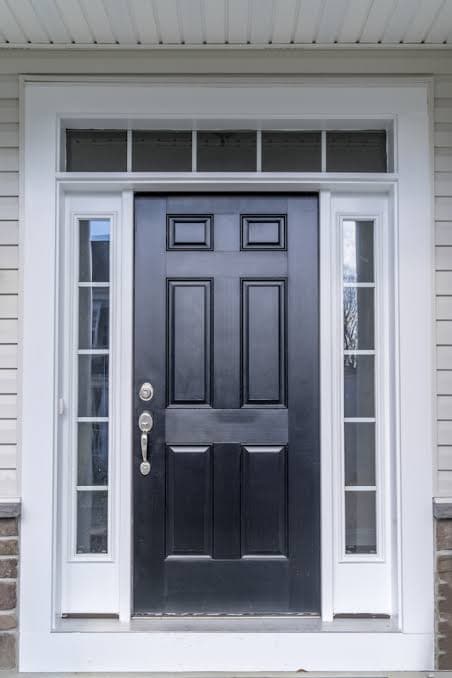
Fiberglass vs. Steel Entry Door: Which Is Right for Your Home?
Jeff Stover
Owner of E&K Contracting with 20+ years of exterior remodeling experience in Bucks, Lehigh, and Montgomery Counties.
Fiberglass and steel are the two most popular entry door materials, and for good reason. Both insulate far better than an old solid wood door, both can be very secure, and both can look great. The choice comes down to how your entry is exposed, the look you want and how you use the door.
How each door is built
A steel entry door has a thin steel skin over a frame, with a foam core inside for insulation. The edges are often wood or composite so the door can be trimmed and hold hardware.
A fiberglass entry door has a molded fiberglass composite skin over a frame, also with a foam core. The skin can be smooth or textured with a wood grain.
From the inside, both are mostly insulating foam. The skin is what you see, touch and live with, and that is where most of the differences are.
Durability
Dents and impact
Steel is strong, but its skin is thin, and it can dent from a hard bump: a bike handlebar, a moving dolly, a kicked-open door. Small dents can sometimes be filled and painted, but they are hard to make disappear.
Fiberglass resists dents. It shrugs off the everyday knocks that leave marks on steel. A very hard blow can crack or chip it, but that is less common.
Rust and moisture
Steel doors are coated to resist rust, but scratches and chips that reach bare metal can rust, especially at the bottom edge where water and road salt collect. Pennsylvania winters, with snow and ice melt tracked to the door, are hard on that bottom edge.
Fiberglass does not rust and does not rot. It handles moisture well, which makes it a strong choice for doors without much overhang.
Sun and heat
Both materials can be affected by strong sun. Dark colors absorb more heat, and a storm door over a dark entry door can trap heat between them. If your door faces south or west with no overhang, check the manufacturer's guidance on colors and storm doors for the specific product.
Energy efficiency
Both steel and fiberglass doors usually have foam cores and insulate well. The bigger factors for comfort are often the glass in the door, the weatherstripping, the threshold and the quality of installation.
If the door has glass, look for insulated glass with a Low-E coating. Then make sure the door seals evenly when closed. A well-insulated door that does not seal will still feel drafty.
Security
Steel has a reputation as the security choice, but either material can make a very secure door. What matters most is:
- A solid frame anchored into the wall framing.
- Long screws through the hinges and strike plate into the framing, not just the door jamb.
- A quality deadbolt with a long throw.
- A reinforced strike plate.
- Placement of glass so a broken pane does not put the lock within easy reach, or glass that is designed to resist breakage.
A steel door hung in a weak frame is less secure than a fiberglass door hung in a solid one.
Appearance
Steel
Steel doors usually have a smooth surface that takes paint very well. Crisp painted panels suit colonials and traditional homes, and a bold front door color can do a lot for curb appeal. Some steel doors have an embossed texture, but they are not usually meant to be stained.
Fiberglass
Fiberglass offers more range. Smooth fiberglass doors paint well, and wood-grain fiberglass doors can be stained to look like oak, mahogany or cherry. If you want the warmth of a stained wood door on an exposed entry without the constant refinishing, fiberglass is often the answer.
Factory finishes are available for both and are usually more durable and even than a finish applied on site.
Maintenance
Steel doors need occasional checks for scratches and chips, which should be touched up to prevent rust. A painted steel door may need repainting over time depending on exposure.
Fiberglass doors need very little. Painted or stained finishes may need refreshing after many years in harsh sun. Otherwise, clean them and check the weatherstripping.
Both doors benefit from simple care: keep the threshold clean, check the weatherstripping each fall and make sure the door still latches easily.
What drives the cost
Material is one factor. Others include the door's size, style, glass, sidelights or transom, hardware, finish and how much work the opening needs. Fiberglass, especially with a stainable wood grain, often sits higher than a basic steel door, but the exact difference depends on the product lines being compared. For a figure for your home, the free Instant Estimate is a good starting point.
Installation matters for both
Whatever material you choose, the door needs to be set plumb, level and square, anchored into the framing, flashed under the threshold and insulated and sealed around the frame. That is what keeps it swinging smoothly and sealing well through hot summers and cold winters.
Questions to ask before you choose
When you look at doors in either material, a few questions help separate a solid product from a basic one:
- What is the core? Ask whether the door is fully foam-filled and how the edges are built.
- How is the bottom edge protected? On steel doors especially, look for a sealed or composite bottom rail that will not wick water.
- What glass is in it? If the door or sidelights have glass, ask about insulated glass, Low-E coatings and privacy options.
- What finish is included? Ask whether the paint or stain is applied at the factory and what the finish warranty covers. Warranties vary by product and tier, so read what is prorated and excluded.
- What comes with the frame? A composite or rot-resistant frame and an adjustable threshold help the whole unit last.
Which one is right for you
Steel can be a good fit if you want a crisp painted look, the door is protected by a porch or overhang and dents are not a big concern.
Fiberglass can be a good fit if the door takes direct weather, you want a stained wood look, or you want a door that resists dents and rust with very little upkeep.
To see the door options we install, visit our entry door services, look through our recent work, or request a free estimate and we can talk through what makes sense for your entry.
Frequently Asked Questions
Is a steel door more secure than fiberglass?
Both can be very secure. In practice, security depends more on the frame, the deadbolt, the strike plate and how well the door is anchored to the wall framing than on the door skin.
Do fiberglass doors dent?
Fiberglass resists dents well. A hard enough impact can crack or chip it, but everyday bumps from strollers, bikes and packages usually leave no mark.
Can steel doors rust?
Steel doors are coated to resist rust, but if the finish is scratched or chipped and left alone, the exposed steel can rust. Touching up damage promptly helps.
Which door looks more like real wood?
Fiberglass. Many fiberglass doors have a molded wood-grain texture that takes stain, so they can closely resemble a wood door without the upkeep.
Doors done right, the first time
E&K Contracting has served Bucks, Lehigh, and Montgomery County homeowners for over 20 years. Free estimates, no pressure.