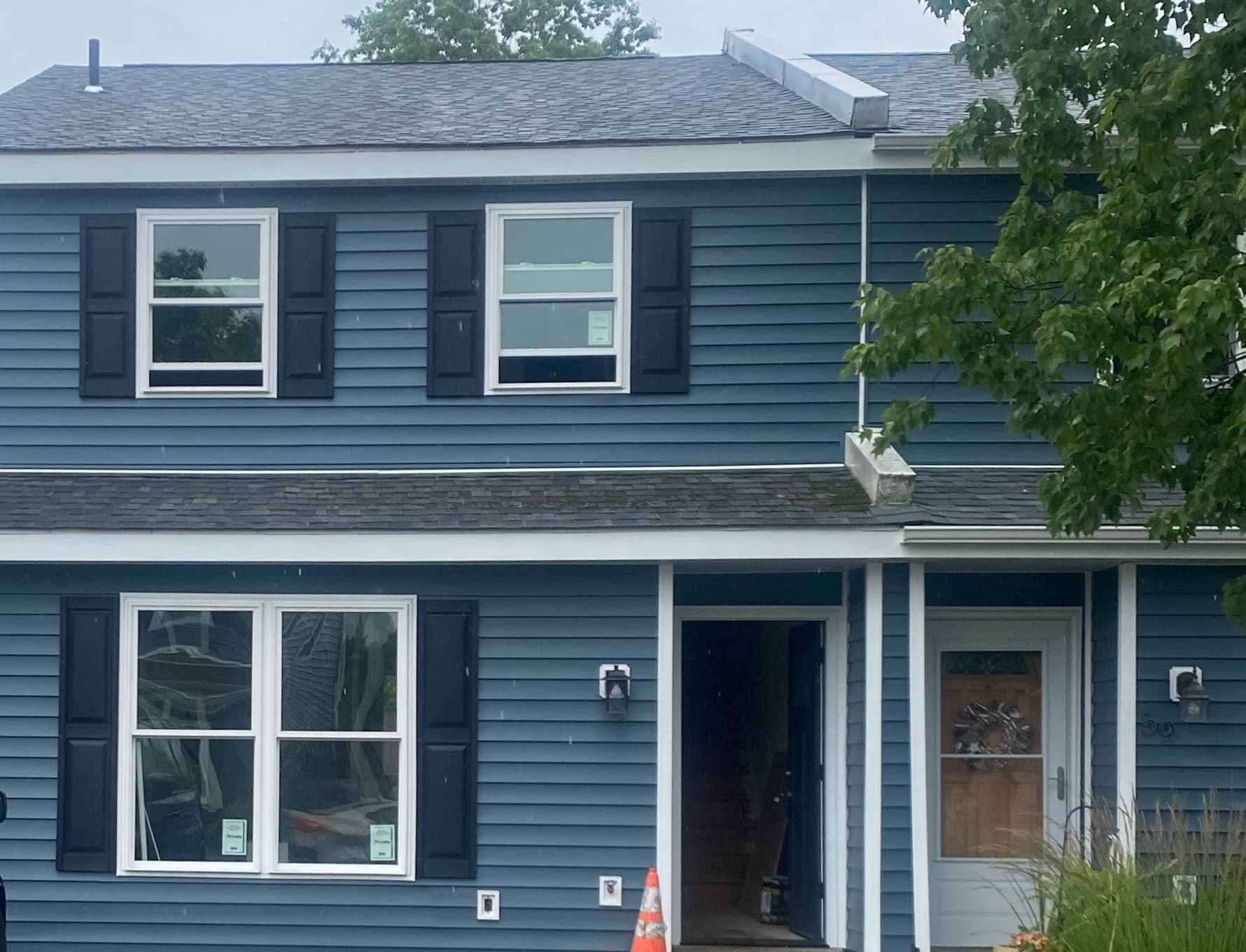
Fiber Cement Siding vs Vinyl: How to Choose for Your Home
Jeff Stover
Owner of E&K Contracting with 20+ years of exterior remodeling experience in Bucks, Lehigh, and Montgomery Counties.
Fiber cement and vinyl are the two siding materials most Pennsylvania homeowners end up weighing against each other. Both can give a house a clean, finished look for a long time, but they get there in very different ways. Here is how they compare on the things that actually matter once the scaffolding comes down.
What each material is made of
Vinyl siding is extruded PVC. The color runs through the panel, the panels lock together along their length, and each one hangs from nails driven through slotted hems. It is light, flexible, and designed to move.
Fiber cement is a blend of cement, sand, and cellulose fibers pressed into planks, panels, shingles, and trim. It is heavy, rigid, and dimensionally stable. It does not expand and contract the way vinyl does, which changes how it is cut, fastened, and detailed.
That basic difference, flexible versus rigid, drives almost every other comparison below.
How they look on the house
Vinyl
Modern vinyl has come a long way. Thicker panels, deeper profiles, and low-gloss finishes look far better than the thin, shiny siding many people picture. It comes in lap, Dutch lap, board and batten, and shake styles, and in a wide range of colors.
Vinyl's limits show up in the details. Because panels overlap at the ends, you will see seams on long walls. Corners and window trim usually rely on J-channel and corner posts, which give a softer edge than true trim boards.
Fiber cement
Fiber cement reads more like painted wood. The boards are flat and crisp, the reveal is sharp, and the shadow lines are clean. It pairs naturally with wide trim boards at corners, windows, and doors, which is a big part of why it looks so substantial on colonials and farmhouses.
If curb appeal and a traditional painted look are high on your list, fiber cement usually has the edge.
Durability in a Pennsylvania climate
Southeastern Pennsylvania puts siding through freeze-thaw cycles all winter, humid summers, wind-driven rain, and the occasional hailstorm.
How vinyl holds up
Vinyl does not rot and does not need paint. Its weak points are impact and heat. A hard hit from a mower-thrown stone or hail can crack a panel, especially in cold weather when vinyl is stiffer. Reflected sunlight from a neighbor's low-E windows or a grill placed too close can distort it.
Most vinyl problems, though, come from installation. Panels nailed tight cannot move, and they buckle or ripple when temperatures swing. Hung correctly, vinyl can last a long time with very little attention.
How fiber cement holds up
Fiber cement resists impact, heat, insects, and fire well. It is not bothered by the sun the way vinyl can be. Its weak point is water at the edges. Cut ends need to be sealed or primed, boards need the manufacturer's clearance from roofs, decks, and grade, and butt joints need proper backing or flashing.
When those details are skipped, fiber cement can absorb moisture at the bottom edges and joints, which leads to paint failure and swelling. When they are done right, it is one of the most durable claddings you can put on a house.
Maintenance over the years
Vinyl is close to no-maintenance. An occasional rinse with a garden hose and a soft brush is usually all it needs. The color is baked in, so there is no repainting, though darker colors can fade over many years.
Fiber cement asks for a little more. Caulked joints and trim seams should be checked every few years and touched up as needed. Eventually the finish will need repainting, although a factory finish typically lasts well before that day comes. The upside is that when you do repaint, you can change the color entirely.
Installation is where the real difference lives
This is the part most comparisons skip, and it is where a premium siding job is won or lost.
Vinyl installation details that matter
- Nails driven in the center of the slots and left slightly loose so panels can slide.
- Proper gaps at J-channel and corner posts for expansion.
- Flashing tape and head flashing at windows and doors before the trim goes on.
- Mounting blocks for lights, outlets, hose bibs, and dryer vents instead of cutting ragged holes.
Fiber cement installation details that matter
- A weather-resistive barrier lapped correctly behind the siding.
- Kick-out flashing where a roof meets a sidewall, so water does not run down behind the siding.
- Clearances above roofs, decks, and grade as the manufacturer specifies.
- Joint flashing or proper backing at butt joints, and sealed cut edges.
- Dust-controlled cutting, because cutting fiber cement creates silica dust.
Fiber cement is heavier and slower to install, and it takes a crew that knows the manufacturer's requirements. Vinyl is faster and more forgiving on older walls that are not perfectly flat, which is common in Pennsylvania homes that have settled over the decades.
Trim, soffit, and fascia
Siding never stands alone. With vinyl, trim is usually vinyl or aluminum-wrapped, and soffit and fascia are matched in vinyl or aluminum. With fiber cement, you can use matching fiber cement trim boards for a cohesive painted look.
Either way, ask how the trim around windows and doors will be built and flashed. Trim is where water most often finds its way in, and it is also what your eye goes to first.
What drives the cost difference
We do not quote numbers in articles because every house is different, but here is what pushes a siding project up or down:
- The material and profile you choose.
- Wall area, number of stories, and how many corners and openings there are.
- How much old siding and sheathing repair the walls need once they are opened.
- Trim, soffit, and fascia scope.
- Whether the house needs new house wrap or added insulation.
Fiber cement generally involves more labor and more finishing than vinyl. For a figure on your own house, the free Instant Estimate is the fastest way to get a starting point.
Which one is right for you
Vinyl is often the better fit if you want low maintenance, a wide color selection, and a material that tolerates walls that are a little out of plane.
Fiber cement is often the better fit if you want the look of painted wood, sharper trim lines, and strong resistance to impact and heat.
There is also a third path. At E&K, siding tiers run from vinyl at the Essential level to fiber cement at Enhanced and Everlast composite at Elite. Everlast is a composite that combines a solid, rigid board with a low-maintenance finish, and it is worth a look if you like both lists above.
Next steps
Seeing colors and profiles on your own house makes the decision easier. Try the siding visualizer, learn more about our siding services, or request a free estimate and we will walk your walls with you and talk through what each material would look like on your home.
Frequently Asked Questions
Is fiber cement siding better than vinyl?
Neither is better for every house. Fiber cement gives a heavier, more solid look and holds up well to impact and heat, while vinyl is lighter, easier to maintain, and forgiving on older walls that are not perfectly flat.
Does fiber cement siding need to be painted?
Fiber cement is either factory-finished or primed for field painting. Either way, it will eventually need repainting, though a good factory finish usually lasts a long time before that comes up.
Can vinyl siding look like real wood?
Thicker, premium vinyl profiles with deeper shadow lines and matte finishes can look convincing from the street. Up close, fiber cement usually reads more like painted wood.
Which siding handles Pennsylvania winters better?
Both can perform well here when they are installed correctly. Vinyl must be hung loose so it can move with temperature swings, and fiber cement needs proper clearances, flashing, and sealed cut edges to keep moisture out.
Siding done right, the first time
E&K Contracting has served Bucks, Lehigh, and Montgomery County homeowners for over 20 years. Free estimates, no pressure.