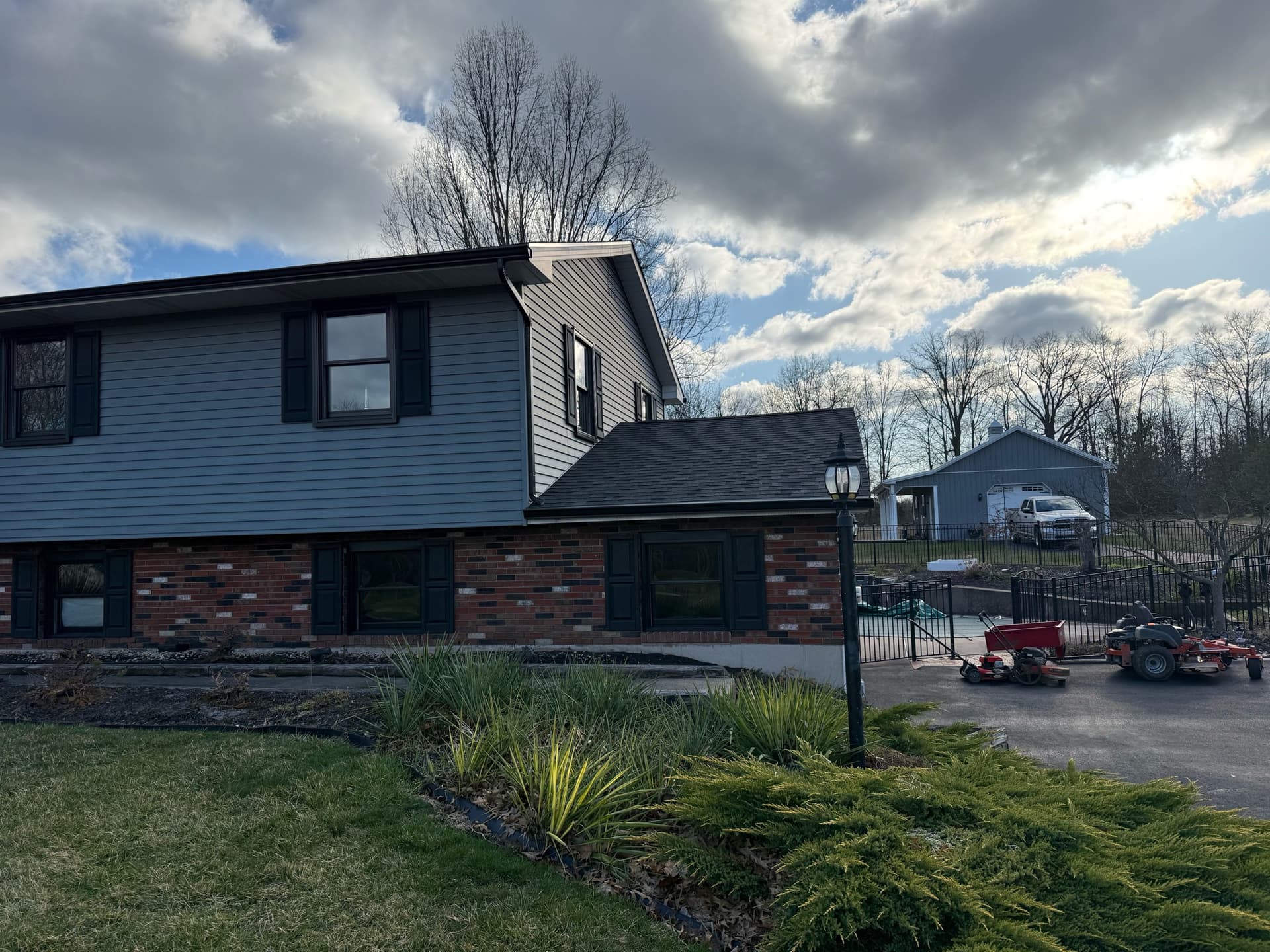
Composite Siding Pros and Cons for Pennsylvania Homes
Jeff Stover
Owner of E&K Contracting with 20+ years of exterior remodeling experience in Bucks, Lehigh, and Montgomery Counties.
Composite siding has become the premium choice for a lot of homeowners who want the look of real wood without the upkeep. It is not the right fit for every house, though, and the word "composite" covers more than one kind of product. Here is an honest look at what it does well and where it asks more of you.
What "composite siding" actually means
Composite is a broad label. It describes any siding made by combining materials into an engineered board instead of using a single raw material like vinyl or natural wood.
Some composites are made with wood fibers or strands bound with resins and waxes. Others contain no wood at all. Everlast, the composite siding E&K installs, is made from inorganic minerals and polymer resins, which means there is no wood content to absorb water or attract insects.
That distinction matters. When you compare quotes or read reviews, check what the board is actually made of, because a wood-based composite and a mineral-based one behave differently in wet weather.
The pros of composite siding
It looks like painted wood
Composite boards are thick and rigid, so they lie flat on the wall and produce crisp shadow lines. The texture and the solid feel read like real wood, especially from the street. On a traditional colonial or farmhouse, that substantial look is a big part of the appeal.
Strong resistance to impact and weather
A rigid board handles bumps from ladders, balls, and wind-blown debris better than thin vinyl. Composites that contain no wood also resist rot, swelling, and insect damage. In a climate like ours, with freeze-thaw cycles and humid summers, that moisture resistance is a real advantage.
Low maintenance
Many composite products come with a factory color finish that is designed to hold up for a long time without regular repainting. Routine care is usually just a gentle wash now and then. You avoid the scrape-prime-paint cycle that wood siding demands.
Dimensional stability
Mineral-based composites expand and contract far less than vinyl. That stability helps the walls stay flat and the joints stay tight through temperature swings, which keeps the house looking crisp.
Easier handling than fiber cement
Compared with fiber cement, many composite boards are lighter and easier to handle on the wall. Ask your installer how the specific product is cut and fastened, since handling requirements vary by manufacturer.
The cons of composite siding
Higher investment
Composite sits at the premium end of siding options. The material itself and the care it takes to install it well both factor in. Whether it is worth it depends on how long you plan to stay, how much you value the look, and what the rest of the house needs.
Fewer color choices than vinyl
Vinyl offers a very wide color selection. Composite lines generally offer a curated palette. Most homeowners find a color they like, but if you have a very specific shade in mind, check the color card early.
Installation skill matters
Composite rewards careful work and punishes shortcuts. Fastening patterns, joint spacing, clearances, and flashing all need to follow the manufacturer's instructions. A crew that treats composite like vinyl can create problems that show up later and may affect warranty coverage.
Not every product is equal
Because "composite" is a broad category, quality varies. A wood-based board with poorly sealed edges can behave very differently from a mineral-based product. Ask what the board is made of and what the warranty actually covers.
How composite compares to vinyl and fiber cement
Composite vs vinyl
Vinyl is lighter, less involved to install, and comes in more colors. Composite is thicker, more rigid, more impact resistant, and looks more like real wood. If curb appeal and a solid feel are priorities, composite usually wins. If you want the most straightforward low-maintenance option, vinyl is hard to beat.
Composite vs fiber cement
Both give a painted-wood look. Fiber cement is heavy and needs to be repainted eventually. Many composites carry a factory finish meant to last without routine painting and handle with less dust and weight. Fiber cement has a long track record and works well with matching trim boards.
At E&K, the three siding tiers line up with these materials: vinyl at Essential, fiber cement at Enhanced, and Everlast composite at Elite.
The details that make a composite job look premium
The board is only half the story. What separates a premium siding job from an ordinary one is what happens at the edges.
Trim and corners
Wide, well-proportioned trim at corners, windows, and doors frames the siding and gives the house its finished character. Ask how corners will be built and what trim material will be used.
Flashing at openings
Every window, door, and penetration is a place water wants to go. Proper head flashing, flashing tape, and kick-out flashing where roofs meet walls protect the sheathing behind the siding. These details are hidden once the job is done, which is exactly why they need to be done right.
Soffit and fascia
Updating soffit and fascia at the same time keeps the whole exterior consistent and gives you a chance to address any rot or ventilation problems at the eaves.
Wall prep
Old homes rarely have perfectly flat walls. A good crew checks the sheathing, repairs soft spots, and installs a proper weather-resistive barrier before the first board goes up.
Questions to ask before you choose composite
- What is the board made of, and does it contain wood fibers?
- What finish does it come with, and is it meant to be repainted?
- What trim, corner, and accessory pieces are available in the same line?
- What are the manufacturer's installation requirements, and has the crew installed this product before?
- What does the warranty cover, what is prorated, and what is excluded?
Specific answers to these questions are a good sign that the product and the installer are a solid match.
Is composite siding right for your home
Composite is often a strong fit if you:
- Plan to stay in your home for many years.
- Want the look of painted wood without regular repainting.
- Care about impact resistance and long-term stability.
- Want a premium finish that elevates curb appeal.
It may not be the best fit if you need the widest color selection or are working with a tighter budget, where vinyl or fiber cement can still deliver a great-looking result.
Next steps
The best way to decide is to see it on your own house and talk through the details. Explore our siding services, try colors in the siding visualizer, get a starting figure with the free Instant Estimate, or schedule a free estimate to walk the house with us.
Frequently Asked Questions
What is composite siding made of?
It depends on the product. Some composites blend wood fibers with resins, while others, such as Everlast, use mineral and polymer ingredients with no wood content. Ask what is in the board, because it affects how it handles moisture.
Does composite siding need painting?
Many composite products come with a factory color that is not meant to be repainted on a regular schedule. Check the specific product's finish details before you buy.
Is composite siding better than vinyl?
Composite is usually thicker and more rigid than vinyl, so it looks more like real wood and resists impact better. Vinyl is lighter and typically less involved to install, so the right choice depends on your priorities.
How long does composite siding last?
Quality composite siding is built for a long service life, but how long it lasts depends heavily on installation, flashing, and trim details. Read the warranty for what is prorated and what is excluded.
Siding done right, the first time
E&K Contracting has served Bucks, Lehigh, and Montgomery County homeowners for over 20 years. Free estimates, no pressure.