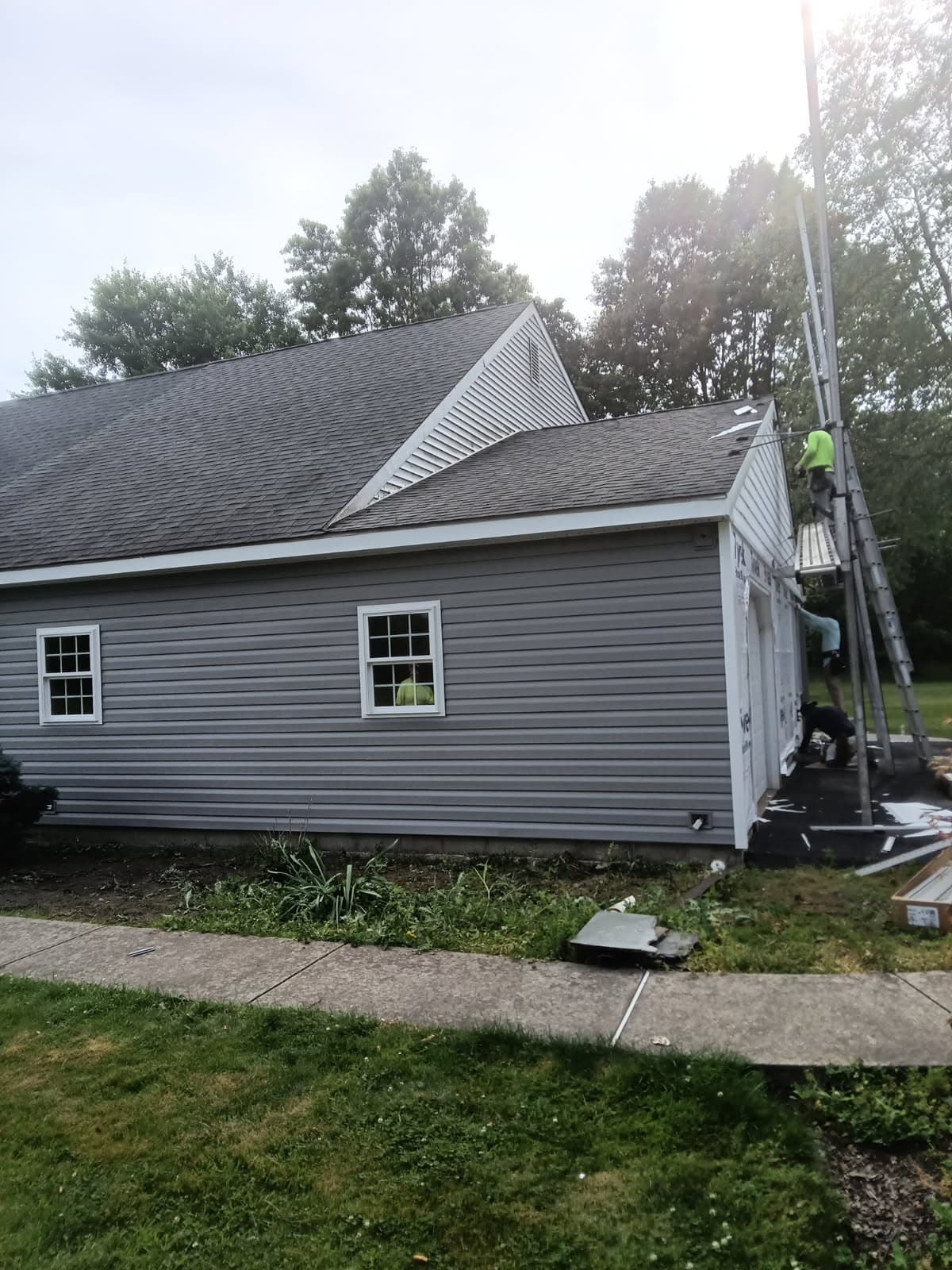
Choosing a Vinyl Siding Contractor You Can Trust
Jeff Stover
Owner of E&K Contracting with 20+ years of exterior remodeling experience in Bucks, Lehigh, and Montgomery Counties.
Choosing a vinyl siding contractor gets confusing fast because two estimates can sound similar, while the finished result can age very differently after a few Pennsylvania winters. A trustworthy contractor does more than hang panels. The job is to help you choose the right siding, remove or repair what is already there, install the new exterior correctly, and keep water out of the wall system. Installation quality matters just as much as the siding itself.
What a trustworthy vinyl siding contractor actually does
A vinyl siding contractor handles exterior cladding, which is the outer layer that protects your home from weather and gives it a finished look. That sounds simple on paper, but replacement work usually involves much more than swapping old panels for new ones. Your contractor should inspect the wall condition, explain product differences in plain English, outline how trim and moisture protection will be handled, and install the siding so it can expand and contract without problems.
Here’s the thing: vinyl siding is forgiving in some ways, but not in the ways that matter most. If the fastening, flashing, seams, and wall prep are wrong, the outside can look fine for a short time and still develop issues later. That is why trust comes from process, not just from a sales pitch.
Why vinyl siding is still a common choice
Vinyl remains a common option because it gives many homeowners a practical mix of low upkeep, broad color choice, and a cleaner exterior without the repeated maintenance that comes with some other materials. It also fits replacement projects well, especially when you want to improve appearance and reduce routine painting and scraping.
For many homes in Bucks, Lehigh, and Montgomery counties, vinyl also works well because it can adapt to a wide range of architectural styles. A ranch in Quakertown, a colonial in Doylestown, and a rowhome-style exterior in Norristown can all use vinyl successfully, as long as the profile, trim, and installation details fit the house.
Why contractor choice matters more than the brochure
A brochure can make almost any siding line look good. The catch is that walls do not fail on paper. Problems show up outside, where panels face sun, cold, wind, and moisture.
If siding is nailed too tight, panels can buckle or ripple as temperatures change. If it is left too loose, it can rattle, shift, or look uneven. Poor seam work can leave visible gaps. Weak flashing around windows, doors, and roof lines can let water get behind the siding. Even decent material can perform badly when the installation is sloppy.
Start with the basics: licensing, insurance, and local experience
Before you compare color samples or trim styles, start with the basics. A contractor should be properly registered, insured, and experienced with replacement work in southeastern Pennsylvania. That first screen removes a lot of risk.
This matters even more in a region with hot summers, cold winters, wind-driven rain, and older housing stock. Many homes in this area have layers of past repairs hidden behind the current exterior. A contractor who only talks about the finished look, and not what may be behind the wall, is skipping the hard part of the job.
What to verify before anyone starts work
Ask for proof of liability insurance and workers’ compensation coverage. If something is damaged during the project, or if someone is hurt on site, that documentation matters. You also want a written estimate with a clear scope of work, not a vague promise scribbled on the back of a business card.
Try to verify who is responsible for removal, disposal, trim work, and any wall repair discovered after the old siding comes off. If those items are not in writing, disagreements later become much more likely.
Why local replacement experience matters in southeastern pennsylvania
Replacement siding is not the same as siding on a new build. On an older home in Allentown, Doylestown, or Norristown, the crew may find damaged sheathing, old moisture problems, uneven walls, or trim that needs to be rebuilt to fit the new siding correctly.
That kind of retrofit work takes judgment. A contractor with local replacement experience is more likely to recognize where trouble tends to show up, around windows, at roof-to-wall intersections, behind corner boards, and near older additions where materials meet awkwardly. For homeowners in this area, that experience is not a bonus. It is part of the job.
How to judge siding quality, not just the sales pitch
A reliable contractor should be able to explain product choices without drowning you in jargon. If one estimate names a specific vinyl line and another barely describes the material, the difference matters. You need enough detail to compare quality, not just color and price.
Good conversations usually cover panel thickness, durability, wind performance, finish quality, and how the product is expected to hold up through seasonal temperature swings. If the discussion stays at the level of “premium” and “better-looking,” you still do not have useful information.
Thickness, durability, and weather resistance
Thin vinyl often costs less up front, but it is usually more vulnerable to cracking in cold weather and warping when heat builds up. Ask how the siding handles impact, wind, and normal expansion and contraction through the seasons.
The trick is not to chase the heaviest panel automatically. It is to understand whether the product fits your home’s exposure and whether the installer knows how to fasten it correctly. Even a stronger panel can look bad if it is overdriven or poorly aligned.
Color retention and finish options
Vinyl gives you a wide range of colors and profiles, from traditional lap siding to styles that mimic wood grain. But not every product holds its appearance equally well over time. Sun exposure, weathering, and surface quality all affect how the color looks after years outdoors.
That is worth discussing before you sign. A reliable contractor should explain whether the product line has a reputation for holding color well, what finish options are available, and how the chosen style will look with your existing trim, roofing, gutters, and windows.
Insulated vinyl and energy-related upgrades
Insulated vinyl siding is standard vinyl with rigid foam attached behind it. In plain terms, it adds shape and backing to the panel and may help with comfort and noise in some homes. It can also help a wall look flatter by reducing minor waviness from the surface underneath.
But siding alone does not solve deeper insulation or moisture issues. If the wall system behind the siding is poorly prepared, insulated panels will not fix that. The better approach is to view insulated siding as one part of a larger exterior system that may include house wrap, flashing updates, trim repairs, and, in some homes, attic insulation or other efficiency work.
Questions to ask a vinyl siding contractor before you sign
Clear answers now are easier to trust than polished promises later. A good contractor should be able to walk through the process, show past work, and explain how warranty coverage works without getting evasive.
At E&K Contracting, Inc., this is how siding conversations should work. You should understand what is being installed, how your home will be protected during the job, and what happens if hidden problems show up once removal begins.
Ask about installation method, prep work, and problem-solving
Ask what goes behind the siding, how flashing will be handled, how trim will be built out, and what fastening method will be used. You should also ask what happens if rot, damaged sheathing, or signs of moisture appear after the old siding is removed.
A contractor with a real process will answer directly. House wrap, flashing, and water management should not sound like afterthoughts. Neither should problem-solving. If the answer is vague, the process may be vague too.
Ask for photos, references, and recent local jobs
Photos should show more than a nice curb view from across the street. Look for close views of seams, corners, window trim, soffits, and transitions where different materials meet. Those details tell you more than a glamour shot ever will.
Recent local references also matter. Work done on homes in Bucks, Lehigh, or Montgomery County is more useful to you than a project from a very different climate or building style. The goal is to see how the contractor handles real replacement conditions similar to your home.
Ask what the warranty actually covers
Always separate the product warranty from the labor warranty. Material coverage comes from the manufacturer. Installation coverage comes from the contractor. Those are not the same thing.
Warranty terms vary by product and tier. Some product lines offer broader coverage than others, and coverage is often prorated over time. The catch is simple: a long material warranty does not help much if the actual problem came from poor installation. Ask which issues fall under labor, which fall under product coverage, and how claims are handled if a problem appears later.
Warning signs that a contractor may not be worth your trust
Most hiring mistakes do not begin with dramatic red flags. They begin with small gaps in communication, missing details, or numbers that look better than the scope behind them.
If anything feels unclear before the contract is signed, assume it will be harder to sort out once the project starts.
Low bids with missing details
A low quote can leave out important work such as tear-off, disposal, trim replacement, moisture barrier work, or repairs to damaged wall sections. On paper, that kind of estimate looks lean. In practice, it can lead to change orders, shortcuts, or both.
Compare estimates line by line. If one proposal is much shorter than the others, that usually means something is missing, not that the contractor found a secret way to do the same job better.
Pressure tactics, vague answers, and no paper trail
Be cautious if the sales visit feels rushed or if the contractor pushes for a same-day signature. The same goes for handshake-only promises, missing insurance documents, or a refusal to provide a written scope.
Trustworthy contractors do not need mystery to close a project. You should be able to review the details, compare them, and come back with questions without getting pushed around.
Signs of poor workmanship in past projects
Poor siding work often shows itself in plain sight. Look for wavy lines, visible gaps, awkward transitions, misfit corners, and panels that look too tight or too loose. The effect is a bit like a cabinet door that never quite sits straight. You notice it every time you look.
If possible, inspect photos closely or drive by a recent project with permission and a location the contractor has shared appropriately. Clean lines and consistent trim details tell you a lot about the crew’s habits.
Comparing estimates without getting lost in the details
This is where many decisions drift off course. One estimate may look cheaper simply because it names less. Another may look higher because it actually explains the full job.
The fix is to compare proposals on scope, materials, prep, and warranty, not on the bottom number alone.
What a complete siding estimate should include
A complete estimate should identify the siding product or product line, the selected color, and the profile being installed. It should also spell out whether insulation is included, whether old siding will be removed, what underlayment or house wrap is part of the job, how flashing and trim will be handled, whether soffit and fascia tie-ins are included when relevant, what cleanup covers, the expected timeline, and how payments are scheduled.
That level of detail protects you because it gives both sides the same expectations from the start.
When a higher quote may be the better value
A higher quote can reflect stronger prep work, better material, more careful trim details, longer labor coverage, or a more experienced replacement crew. Those items are easy to miss when you focus only on the total.
The cheapest vinyl siding contractor is rarely the safest bet. If one proposal explains how the wall will be protected and another mostly lists panel color and square footage, the more detailed quote may offer better value even before the first piece of siding goes up.
Choosing the right contractor for your home and priorities
Not every siding project has the same goal. Some homes need a full tear-off and replacement. Others need targeted repair, design guidance, or careful detail work on an older exterior. The right contractor is the one whose strengths match the actual job.
That sounds obvious, but it is where many hiring decisions get fuzzy.
Best fit for full replacement vs. targeted repair
If your siding is broadly worn, loose in multiple areas, or tied to deeper wall issues, you need a contractor who is strong in full replacement and wall prep. That kind of project depends on planning, moisture management, trim coordination, and a clean installation sequence.
If the issue is limited storm damage or a smaller section that needs to be matched, targeted repair skill matters more. Matching existing panels, aligning with older courses, and blending repairs into the rest of the house takes a different kind of care.
Best fit for older homes, design updates, or low-maintenance goals
Older homes often need extra attention around trim profiles, window surrounds, and uneven framing. If preserving character matters to you, look for a contractor who can talk through those details instead of flattening every answer into “new siding is new siding.”
If your main goal is a design update, ask how the contractor helps you compare profiles, trim scale, and color combinations. Some use visualization tools to help you preview changes before work begins. If your goal is lower upkeep, keep the focus on durability, finish quality, and how the new siding ties into other exterior elements such as roofing, replacement gutters, windows, or doors.
A simple hiring checklist you can use this week
Pull out any estimate you already have and check it against the basics. That one step can tell you a lot. If the proposal is missing core details now, it will not become clearer later.
Your final contractor checklist
Use this short checklist before you sign with any vinyl siding contractor. Insurance should be verified. Local references should be current. The scope should be clear and written down. The siding product should be named, not described vaguely. Prep work, flashing, and moisture management should be explained. Warranty terms should be clear, with product tier and prorated coverage details where applicable. The timeline should sound realistic. Recent similar work in Bucks, Lehigh, or Montgomery County should be available to review.
If you want a simple place to start, take one estimate and mark anything it does not answer. That small exercise usually makes the next decision much clearer.
Frequently Asked Questions
How many estimates should you get for siding replacement?
Getting more than one estimate helps you compare scope, materials, and communication style. The goal is not to collect the most quotes possible. It is to get enough detail to spot what is missing, what is included, and which contractor explains the work clearly.
Can a vinyl siding contractor handle other exterior work at the same time?
Some exterior contractors also coordinate roofing, windows, doors, attic insulation, skylights, and full gutter replacement. That can be useful when siding work overlaps with trim, flashing, or other exterior details. You still want each part of the scope written clearly so nothing gets blurred together.
How do you know if vinyl siding needs full replacement or just repair?
If damage is limited to a small area and matching material is available, repair may be enough. If the siding is brittle, loose in many places, faded unevenly, or hiding moisture problems behind the wall, full replacement is often the better long-term answer. A proper inspection should explain which condition you actually have.
What should you expect during siding removal?
Once old siding comes off, hidden conditions can appear, such as damaged sheathing, trim problems, or signs of past moisture. A good contractor should explain ahead of time how those findings are handled, how repairs are documented, and how wall protection is restored before new siding is installed.
Does insulated vinyl siding lower energy bills by itself?
Insulated vinyl can support comfort and improve the finished wall surface, but it is not a cure-all. Energy performance depends on the full wall system, including air sealing, moisture control, and the condition of insulation already in place. It works best as part of a sound exterior upgrade, not as a stand-alone fix.
Siding done right, the first time
E&K Contracting has served Bucks, Lehigh, and Montgomery County homeowners for over 20 years. Free estimates, no pressure.