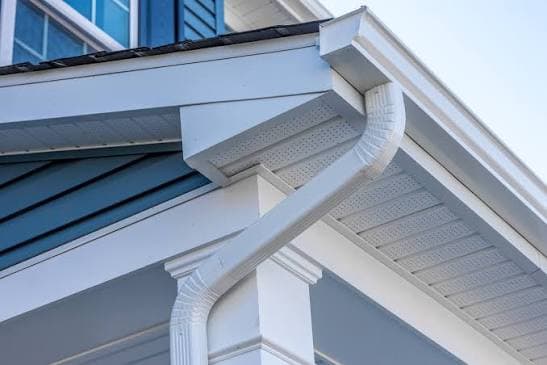
Best Gutters for Your Home in Southeastern Pennsylvania
Jeff Stover
Owner of E&K Contracting with 20+ years of exterior remodeling experience in Bucks, Lehigh, and Montgomery Counties.
The best gutters for home use in Southeastern Pennsylvania are usually seamless aluminum gutters sized to match your roof and runoff, not just your budget. If your gutters overflow in a summer downpour or clog after leaves pile up in fall, the issue is rarely cosmetic. It is a water-control problem, and the right system fixes it with less upkeep.
Why gutter choice matters more in southeastern pennsylvania
In Bucks, Lehigh, and Montgomery counties, gutters deal with more than routine rain. You get hard summer storms, leaf drop in fall, snow in winter, and freeze-thaw swings that expose weak seams, poor slope, and undersized downspouts fast. A gutter system that looks fine in mild weather can still fail when runoff comes off a steep roof all at once.
Here’s the thing: gutters are not trim. They are part of your home’s drainage system, just like flashing, downspouts, and the grading around the foundation. If water spills over the front edge, shoots past a corner, or empties too close to the house, it can stain siding, wash out mulch beds, wear paths into soil, and leave water where you do not want it.
That is why gutter choice matters more than many homeowners expect. In this region, the best setup is the one that keeps moving water away from your home reliably through changing seasons, without turning into a constant maintenance project.
What makes the best gutters for your home
The best gutter is not the one with the most features on paper. It is the one that handles your roof’s water volume, holds up in local weather, resists leaks, and does not ask for constant attention.
A few criteria matter more than the rest. Water capacity comes first, because a beautiful gutter that overflows is the wrong gutter. Durability matters next, especially where snow load, ice, and seasonal expansion test fasteners and seams. Leak resistance follows closely, which is why seamless systems have become the default choice for many homes. Maintenance matters too, particularly if your property has maples, oaks, or pine trees nearby. Then there is appearance, since gutters are part of the exterior line of the house. Price matters, but mostly as a tradeoff against lifespan and upkeep.
If you keep one rule in mind, use this one: the best gutter for your home is the one that moves water away dependably with the least upkeep.
Water capacity and drainage performance
Capacity starts with size, but it does not end there. Gutter width, profile, slope, outlet size, and downspout placement all work together. If one part is undersized, the whole system can act undersized.
For many homes, the choice comes down to 5-inch versus 6-inch gutters. The larger size is not just a small step up. 6-inch gutters carry much more water than standard 5-inch systems, which can make a noticeable difference during heavier Pennsylvania storms or on larger roof sections.
Slope matters just as much. A gutter has to pitch enough to keep water moving, but not so much that it looks visibly off. Outlet locations matter too. Long runs with too few outlets force water to travel farther before it can exit, which raises the chance of overflow in hard rain. And downspouts have to keep up with what the gutter collects. A big trough with a small exit still backs up, like a kitchen sink with a narrow drain.
Durability in four-season weather
Southeastern Pennsylvania is hard on exterior materials. Cold snaps, thaw cycles, wet snow, wind, and summer heat all push and pull on gutters over time. That movement can loosen spikes, open joints, and leave standing water in low spots.
Material choice plays a big role here, but installation does too. Heavier hangers, better spacing, and a clean connection to the fascia all help the system stay stable. Cheap sectional systems often show the same pattern after a few seasons: seams start leaking, sections sag, and the problem shifts from one corner to another. What looked like savings at installation turns into repeat maintenance.
The catch is that gutter failure often starts small. A little separation at a joint or a slight dip in one run can become fascia damage or recurring overflow later. That is why durability is not just about how long a material lasts in theory. It is about how well the whole system stays aligned and watertight year after year.
Maintenance and debris control
Leaves, seed pods, pine needles, and roof grit all affect gutter performance. Even a correctly sized system can struggle if debris collects at outlets or packs into corners. In many neighborhoods, debris load is the factor that decides how often you have to think about your gutters.
Smooth interiors help, and fewer seams help more. Debris tends to snag at joints, screws, and uneven sections first. That is one reason seamless systems are widely treated as the professional standard. Seamless gutters have fewer leak points and fewer places for debris to catch.
Gutter guards can reduce cleanup and help water keep flowing, especially on homes with mature trees. Still, the best guard is not a magic lid that makes the system maintenance-free. It is a tool that lowers how often debris gets inside and how often you need to inspect it.
Appearance and fit with your home
Function comes first, but appearance still matters. Gutters run along the roofline, so the profile and color can either blend in cleanly or look like an afterthought.
K-style gutters suit many colonials and ranch homes because the shape looks crisp and familiar. Half-round gutters fit older homes better when you want a more traditional edge. On a simple suburban exterior, the right color match often matters more than the shape. On an older stone or brick home, profile can change the whole look.
That does not mean aesthetics should override performance. It means the best choice is one that protects the house well and looks like it belongs there.
Best gutter types for most homes
Most homes fall into a small set of practical gutter types. The main differences come down to profile, water handling, ease of cleaning, and how well the style fits the architecture.
K-style gutters
K-style gutters are the most common choice for a reason. The front profile resembles crown molding, so the shape works with many home styles, and the form holds a good amount of water relative to its size.
For standard suburban homes in Southeastern Pennsylvania, K-style usually makes the most sense. It balances capacity, availability, and appearance well. It also pairs easily with seamless fabrication, which improves long-term leak resistance.
The main downside is that the profile has more corners and folds than a round shape, so debris can settle in those edges. That is not a deal-breaker, but it is worth noting if low maintenance is high on your list.
Half-round gutters
Half-round gutters have a smooth, curved interior that helps water and debris move more freely. Because the shape is simpler, cleaning is often easier, and the look is more traditional.
That traditional look is exactly why half-round systems are often chosen for older homes or houses with distinctive architecture. If your home has historic character, the shape can feel more natural than a standard K-style profile.
The tradeoff is capacity and cost. A half-round gutter of similar width often handles less water than a K-style gutter, and the brackets and accessories tend to be more specialized. If your roof sheds a lot of water, style alone should not drive the decision.
Box gutters
Box gutters are a special case. Some are built into the roof structure on older homes, while others are used as an architectural choice on newer designs. Either way, they are not the default replacement choice for most homeowners.
On older homes, built-in box gutters deserve careful inspection because problems may involve surrounding wood, flashing, or roofing details, not just the gutter trough itself. On newer homes with clean-lined designs, box-style systems can look sharp, but only if the drainage plan is equally well thought out.
In practical terms, box gutters are less about general buying advice and more about specific design or restoration needs.
Seamless vs. sectional gutters
This is one of the biggest decisions in the whole category. Sectional gutters come in pieces joined together during installation. Seamless gutters are formed in long custom lengths with joints mainly at corners and downspouts.
For long-term performance, seamless usually wins. Fewer joints mean fewer places to leak and fewer spots for debris to catch. Custom-fit gutters also tend to look cleaner because the runs are made for your roofline rather than pieced together from stock lengths.
Sectional systems still show up in lower-budget projects and DIY work because they are easier to buy off the shelf. But every seam is a future maintenance point. If your goal is reliability and lower upkeep, seamless is the stronger choice.
Best gutter materials: pros, cons, and real-world tradeoffs
Material shapes how a gutter ages. Some options resist corrosion better. Some dent less easily. Some cost more up front but ask for less over time.
Aluminum gutters
Aluminum is the practical default for many homes. It is lightweight, does not rust, comes in many colors, and works well as a seamless system. That combination is hard to beat for everyday performance.
Modern aluminum has improved over time, especially with thicker stock and better baked-on finishes that hold color longer. Modern aluminum is one of the strongest all-around choices for homes that need good performance without the weight or maintenance concerns of steel.
The main drawback is denting. If branches hit the gutter or ladders are set carelessly, aluminum can deform more easily than heavier metals. Still, for most homes, that tradeoff is acceptable given the balance of corrosion resistance, appearance, and low upkeep.
Copper gutters
Copper is a premium choice. It lasts a long time, resists corrosion, and develops a patina that many homeowners like on older or high-character homes.
This material makes the most sense when architecture and long-term ownership are both priorities. If your home has a distinctive exterior, copper can look appropriate in a way painted aluminum never quite does. It is a buy-once mindset more than a short-term value play.
The catch is simple: copper is not for every budget or every home style. On a standard replacement where function and cost balance matter most, aluminum usually remains the more practical fit.
Steel gutters
Steel gutters are strong and more resistant to impact than aluminum. If branch strikes or physical toughness are a major concern, steel has a clear advantage.
But there is a tradeoff. Steel is heavier, which raises the importance of proper support and secure fastening. It also has more corrosion risk over time if the protective finish fails. Once scratches, chips, or worn spots expose the metal, rust can become the long-term issue.
For some homes, steel is a sensible choice. It is just not the low-maintenance winner in this climate.
Vinyl gutters
Vinyl often attracts attention because of the lower upfront cost and easy availability. For small projects or short-term fixes, that can sound appealing.
In this region, though, vinyl is usually a weaker long-term fit. Temperature swings, sun exposure, and brittleness over time tend to show up sooner than many homeowners expect. Joints can separate, pieces can crack, and the system can become a repeated replacement cycle instead of a one-time upgrade.
If you want a gutter system that lasts through seasonal stress with fewer headaches, vinyl is rarely the best answer.
The best overall setup for many homes in bucks, lehigh, and montgomery counties
For many local homes, seamless aluminum gutters are the best all-around choice. That is the clearest answer because this setup balances capacity, corrosion resistance, appearance, and manageable maintenance better than most alternatives.
The recommendation becomes even stronger when the system is sized to the roof instead of installed as a default package. Some homes do perfectly well with standard dimensions. Others need a step up in capacity to stop repeated overflow.
When 5-Inch gutters are enough
A 5-inch system is often enough on average-size roof sections with moderate runoff and no history of overflow. If your roofline is fairly simple, your roof pitch is moderate, and water has not been regularly shooting over the edge during storms, the standard size may still be the right fit.
That is especially true when installation quality is high and downspout placement is thoughtful. A correctly pitched 5-inch seamless system can outperform a poorly designed 6-inch setup. Size matters, but fit matters more.
When to upgrade to 6-Inch gutters
A 6-inch system makes sense when your roof sends more water into the gutter than a standard setup can handle comfortably. Steep roofs, long roof planes, multiple valleys, and repeated overflow are common signs.
If water spills near valleys during stronger storms, that is one of the clearest signals that capacity needs attention. Larger gutters give runoff more room before it overtops the front edge, which can be the difference between controlled drainage and water pouring onto siding or walkways.
Why larger downspouts matter too
Bigger gutters work best when the downspouts are upgraded too. Otherwise, water collects faster than it can exit, and the wider gutter still backs up.
Think of the system as a path, not a bucket. Water has to be collected, moved, and discharged. Larger downspouts, especially on high-volume roof areas, help the whole system drain the way it should.
Are gutter guards worth it?
Often, yes, but only when the guard matches the debris around your home and the gutter beneath it is installed properly.
If your property has nearby trees, guards can reduce clogs and cut down on how often you need to deal with wet leaf buildup. That benefit is real. But poor-quality guards can create a different problem by trapping debris on top, letting fine material through, or interfering with water entry during heavier rain.
The best way to think about guards is as a maintenance reducer, not a cure-all.
Best types of gutter guards for leafy areas
For homes near mature trees, micro-mesh systems are usually the strongest option. The fine screen keeps out smaller debris while still allowing water into the gutter. In areas with maple seeds, oak leaves, or mixed tree cover, that filtering ability matters.
Micro-mesh guards generally outperform basic screens, foam inserts, and reverse-curve styles in debris-heavy settings. Basic screens can let smaller material through. Foam inserts can break down or hold moisture. Reverse-curve systems can work in some situations, but performance depends heavily on design and installation.
If low maintenance is the goal, ask which guard style suits the trees around your home.
What gutter guards can and cannot do
Guards can reduce cleaning frequency. That is the main win. But they do not make gutters maintenance-free.
You still need occasional inspection. Fine roof grit can collect over time. Debris can gather on top of the guard. Downspouts still need to stay clear. Realistic expectations matter here, because a good guard lowers work, but it does not eliminate it.
Common gutter buying mistakes to avoid
Most gutter problems do not come from choosing between two decent products. They come from bad matching, bad installation, or trying to save money in the wrong place.
Choosing by price alone
The cheapest option often becomes the most expensive one to live with. Lower-grade materials, more seams, weaker support, and less thought given to drainage can lead to leaks, repainting, fascia damage, and earlier replacement.
A gutter system is one of those home components where value matters more than bargain pricing. If you have to replace it again sooner or keep fixing the same trouble spots, the low entry cost stops looking like savings.
Ignoring installation quality
A good gutter installed badly still fails. Hanger spacing, pitch, seam quality, outlet placement, and drip edge integration all affect performance.
Installation details like secure hangers, correct slope, and proper roof edge integration are what keep water moving instead of standing still or slipping behind the gutter. If those details are off, even premium materials can underperform.
Mismatching gutters to roof size and drainage needs
Undersized systems usually show problems first at valleys, inside corners, and long roof runs. Those are the areas where water concentrates, and where a standard setup may not be enough.
If your roof is larger, steeper, or more complex than average, your gutters should reflect that. Buying by habit instead of by runoff volume is one of the most common mistakes in this category.
Skipping drainage beyond the gutter
Getting water into the gutter is only part of the job. It still needs to end up far enough from the house.
Extensions, splash blocks, and discharge planning matter because water dumped beside the foundation can undo the benefit of a well-built gutter system. The gutter and the ground drainage should work together.
How to choose the right gutters for your Home’s style and situation
This is where the comparisons become practical. The best choice depends on what you want most from the system.
Best choice for low maintenance
If low maintenance is the top priority, seamless aluminum with gutter guards matched to your tree cover is the strongest overall setup. You get corrosion resistance, fewer leak-prone joints, and better debris control without moving into a premium material category.
For many homes in this area, that combination hits the sweet spot.
Best choice for older or historic homes
If your home has older architectural details, half-round gutters often fit better visually. Copper can also make sense when the exterior calls for a more traditional material and long-term appearance matters as much as function.
The trick is not to sacrifice capacity just to get the period look right. Traditional style still has to handle modern storm runoff.
Best choice for large roofs or heavy runoff
If your home has broad roof planes, multiple valleys, or chronic overflow, move capacity to the top of the list. A 6-inch seamless system with larger downspouts is usually the right direction.
This is one area where upgrading size solves real problems, not just imagined ones.
Best choice for budget-conscious replacements
If you want a practical replacement without overspending, standard-size seamless aluminum is usually the best place to start. It keeps the material choice sensible while still avoiding the leak and maintenance drawbacks of many sectional setups.
Saving by choosing aluminum over copper is reasonable. Saving by dropping to vinyl or by overlooking installation quality usually is not.
Budget: what You’re really paying for
Gutter pricing is shaped by more than material alone. Size, seamless fabrication, guard type, roof height, number of corners, complexity of the roofline, and removal of old gutters all affect the final total.
That is why two homes with similar square footage can still need very different gutter setups. A simple ranch with straightforward roof edges is one thing. A taller home with valleys, offsets, and multiple discharge points is another.
You are also paying for fit and execution. Custom fabrication, proper fastening, and good drainage planning are part of the value, not add-ons in disguise.
When it makes sense to spend more
Spending more makes sense when the upgrade solves an actual problem or avoids recurring maintenance. Larger gutters for heavy runoff, better finishes for long-term appearance, and higher-quality guards near trees all fall into that category.
Long-term ownership matters here too. If you plan to stay in the home, a more durable system can be the better value simply because it asks less from you later.
Where you can save without cutting performance
You can often save by choosing aluminum instead of copper and by focusing first on sizing and installation quality before appearance upgrades.
That is the simple rule: spend on drainage performance first, then on aesthetics. If your budget has limits, make sure the water-handling side is right before paying for premium material choices.
Signs It’s time to replace instead of repair
Some gutter issues are isolated. Others point to a system that has reached the point where replacement makes more sense.
E&K Contracting, Inc. handles full gutter replacements, so this question matters most when your current system is showing repeated failure rather than one small defect.
Visible damage and sagging
Cracks, separated joints, recurring leaks, and sections pulling away from the fascia are all signs the system is wearing out. Sagging usually means the support has been compromised, the gutter has taken on too much strain, or water has been sitting where it should not.
If the same problems keep coming back in different spots, the design or age of the whole system may be the issue.
Water where it Shouldn’t be
Overflow at corners, foundation pooling, stained siding, and washed-out planting beds all suggest the system is not controlling runoff well anymore.
Those signs matter because they show the problem has moved beyond the gutter itself. Water is already affecting surrounding surfaces and drainage paths.
Recurring clogs or constant maintenance
If you are dealing with repeated cleanouts or trouble at the same roof valley every season, the system may be poorly designed, undersized, or missing the right guard setup.
At that point, more maintenance is often treating the symptom, not the cause.
Questions to ask before you buy new gutters
A good estimate should answer more than material and color. It should explain how the system will handle water on your specific home.
What size and downspout configuration does your home need?
Ask whether your home is a fit for 5-inch or 6-inch gutters, how many downspouts are needed, and whether certain roof sections create heavier runoff than others.
This question gets past generic quoting and into actual drainage planning.
Is the system seamless and custom-fit?
Ask whether the runs are custom formed for your home and where seams will remain. Fewer joints usually mean fewer future leak points and a cleaner finished look.
Custom fit matters because your roofline is not a stock shelf dimension.
What guard option fits your tree coverage?
Ask which guard design matches the debris around your house. Maples, oaks, and pines all drop different kinds of material, and guard performance depends on that difference.
A good answer should connect the guard choice to your actual yard, not just describe a product in general terms.
How will water be directed away from the foundation?
Ask where downspouts will discharge and how water will be moved away from the house. Extensions and exit points matter just as much as gutter size.
If there is no clear answer here, the drainage plan is incomplete.
Quick recommendation guide
If you want the shortest version, here it is. For most homes in Bucks, Lehigh, and Montgomery counties, seamless aluminum is the best overall choice. If your roof handles a lot of runoff, step up to 6-inch sizing and larger downspouts. If low maintenance matters most and you have nearby trees, add gutter guards matched to your trees. If your home has older architecture and appearance is a major factor, half-round or copper may be worth the upgrade. If your budget is tight, keep the material practical but do not cut corners on sizing or installation quality.
The one thing to check first is simple: watch what happens near a roof valley during the next hard rain. If water overruns the gutter there, your best choice probably starts with more capacity, not a prettier profile.
Frequently Asked Questions
What is the best gutter material for most homes in southeastern pennsylvania?
For many homes, aluminum is the best overall material because it resists rust, works well in seamless systems, comes in many colors, and balances durability with lower maintenance. Copper is a strong premium choice, while vinyl is usually a weaker fit for long-term performance in this climate.
Are seamless gutters really better than sectional gutters?
Yes, in most cases. Seamless gutters have fewer joints, so there are fewer places for leaks to develop and fewer seams that can catch debris. Sectional systems can work, but they usually involve more maintenance over time.
Should you choose 5-inch or 6-inch gutters?
Choose based on roof runoff, not habit. A 5-inch system is often enough for average roof sections with no overflow history. A 6-inch system is a better fit for large roof planes, steep roofs, multiple valleys, or homes that already see overflow during stronger storms.
Do gutter guards eliminate the need for maintenance?
No. Guards reduce how often debris gets into the gutter, but they do not make the system maintenance-free. You still need occasional inspection, especially for fine roof grit, surface debris, and downspout flow.
How do you know when gutters should be replaced instead of patched?
Replacement makes more sense when you have repeated leaks, sagging sections, separated joints, overflow in multiple areas, or water pooling near the foundation. If the same issues keep returning, the problem is usually the system as a whole rather than one isolated spot.
Gutters done right, the first time
E&K Contracting has served Bucks, Lehigh, and Montgomery County homeowners for over 20 years. Free estimates, no pressure.