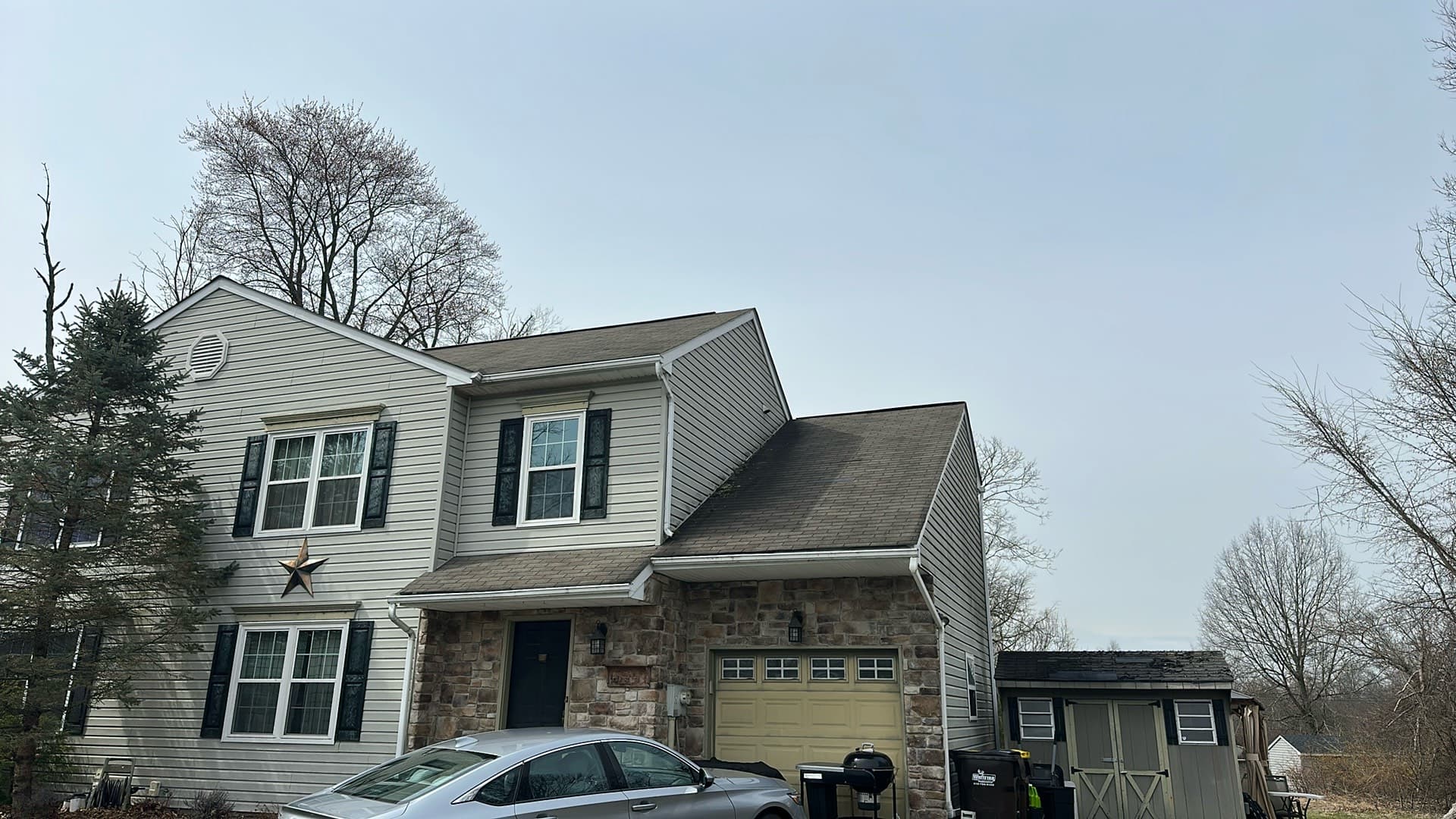
Asphalt vs Metal Roof: Which Is Better in PA?
Jeff Stover
Owner of E&K Contracting with 20+ years of exterior remodeling experience in Bucks, Lehigh, and Montgomery Counties.
If you are choosing between an asphalt vs metal roof in Pennsylvania, the short answer is simple: asphalt is usually better for lower upfront cost, while metal is usually better for long-term performance. For most homes in Bucks, Lehigh, and Montgomery counties, the right pick comes down to your budget now and how long you plan to stay put.
Asphalt vs. metal roof at a glance
Asphalt shingles and metal roofing solve the same problem in very different ways. Asphalt is the practical default. It costs less to install, blends easily into most neighborhoods, and is familiar to almost every roofing crew. That matters if you want a straightforward replacement without a large jump in project cost.
Metal is the longer-view option. It usually lasts much longer, holds up better in rough weather, and can help with summer heat. The catch is the upfront bill. On a typical home, that difference is not small.
Here is the quick side-by-side comparison:
| Feature | Asphalt Shingles | Metal Roofing | |---|---|---| | Upfront cost | Lower | Higher | | Typical lifespan | 20 to 30 years | 40 to 70+ years | | Repairs | Usually simpler | Often more specialized | | Snow and rain shedding | Good | Very good | | Energy efficiency | Fair | Better | | Neighborhood fit | Very flexible | Depends on style and HOA | | Best for | Lower budgets, shorter timelines | Long-term ownership |
If you want the clearest takeaway, here it is: asphalt is the better value for many homeowners today, but metal is the better long-term roof if you can comfortably afford it.
How PA weather changes the decision
Pennsylvania puts more stress on a roof than a mild, dry climate does. You get freeze-thaw cycles in winter, humid stretches in summer, hard rain, wind-driven storms, and the occasional ice dam that shows up at the worst time.
That changes the comparison.
Asphalt shingles can perform well in this region, especially architectural shingles, but repeated expansion, contraction, moisture exposure, and storm wear can shorten service life. Metal roofing tends to handle those conditions better because it sheds water and snow efficiently and is less vulnerable to moisture-related deterioration.
Still, the roof material alone does not solve everything. Ice dams, for example, often start with attic heat loss and poor ventilation, not just the surface material. If insulation and airflow are off, both roof types can run into problems.
In places like Quakertown, Doylestown, Allentown, and along the Main Line, weather is one reason metal gets a closer look than it might in a gentler climate.
Upfront cost and installation price
This is where asphalt usually wins, clearly.
National comparisons consistently show asphalt costing less to install than metal, though the gap depends on the system and the roof layout.
That gap is why many homeowners stop the comparison right here. And honestly, that is reasonable if project cost is the main constraint.
Typical asphalt roof costs in PA
Basic shingle lines cost less than premium architectural products. Tear-off, disposal, ventilation upgrades, and roof shape all affect the total.
You will also see quote differences based on valleys, dormers, chimneys, skylights, and flashing work. A simple ranch is one thing. A cut-up roof with multiple transitions is another.
Typical metal roof costs in PA
Metal roofing has a wider pricing range because the systems vary a lot. Standing seam, which uses concealed fasteners and raised seams, usually costs more than exposed-fastener panels. That higher price reflects both material and labor.
Premium metals, more complex trim packages, and specialized fabrication push the price higher. Metal is not just a different surface. It is often a different level of detailing from start to finish.
What can raise the price of either roof
Some costs have nothing to do with asphalt or metal. If the roof deck has soft spots, that wood may need replacement. Flashing around chimneys, walls, and penetrations can add labor. Skylights, steep slopes, tricky access, and ventilation corrections also change the quote.
That is why the lowest number on paper is not always the best comparison. You need to look at the full roof system, not just the field material.
Lifespan and long-term value
If you expect to stay in your home for a long time, lifespan becomes a major factor.
Asphalt shingles usually last 20 to 30 years. Metal roofs often last 40 to 70 years or more, with 40 to 80 years being a common national estimate. In Pennsylvania, weather can push asphalt toward the lower end of its range if conditions are rough and maintenance is uneven.
That creates the hidden math in this decision. A lower-cost asphalt roof may still cost more over decades if you end up replacing it twice during the time one metal roof keeps going. If you expect to move sooner, that long horizon matters less. If this is the house you expect to keep, it matters a lot more.
Performance in snow, ice, wind, and hail
Pennsylvania weather tests roofing systems in very practical ways. Not abstract ways. Snow piles up, ice forms at the eaves, wind lifts weak edges, and hail exposes weak spots quickly.
Metal generally performs better in harsh conditions, but installation quality can narrow or widen the gap.
Winter performance and ice dams
Metal has an edge in snow shedding. Smooth panels help snow slide off more easily than textured shingles. That can reduce the amount of snow sitting on the roof for long periods.
But ice dams are more complicated. Ice-and-water shield, underlayment, attic insulation, and ventilation matter just as much as surface material. A metal roof on a poorly ventilated house can still get ice dams. An asphalt roof with proper protection and balanced attic airflow can do well through winter.
Wind and storm resistance
Architectural asphalt shingles can be rated up to 130 mph when installed to specification. Properly installed metal systems also perform very well in wind and heavy rain, often with even stronger resistance to uplift and water shedding.
Here is the catch: wind ratings on paper do not fix poor workmanship. If flashing is wrong, nails are off pattern, or trim details are weak, either roof can fail sooner than expected.
Hail and impact resistance
Hail affects these materials differently. Asphalt can lose granules, crack, or bruise. Metal is less likely to crack through, but it can dent. That leads to an important distinction: cosmetic damage and functional damage are not the same thing.
Impact resistance simply means how well a material resists damage when struck. Some metal systems and some shingles carry stronger impact ratings than others. If hail is a concern, ask about the actual product rating, not just the material category.
Energy efficiency and summer comfort
Metal usually has the edge here.
Reflective finishes help metal bounce more solar heat away from the roof surface, which can reduce attic heat gain and lower cooling demand.
Asphalt absorbs more heat, especially in darker colors. That does not mean your house will be uncomfortable under asphalt, because attic insulation and ventilation still do a lot of the work. But if energy performance is one of your deciding factors, metal usually comes out ahead.
Maintenance, repairs, and day-to-day practicality
After installation, asphalt and metal ask different things from you.
Asphalt usually needs more periodic attention over time, but repairs are familiar and often less expensive. Metal often needs less routine maintenance, but if a problem does come up, the fix can be more specialized.
Common asphalt roof maintenance
With asphalt, you will want periodic inspections for granule loss, cracked or curling shingles, algae streaking, and sealant wear around flashing and penetrations. In humid stretches, dark streaks and moss are more than a cosmetic issue if they are ignored too long.
The advantage is simplicity. Asphalt is easier to install and repair, and most roofing crews can service it without any special sourcing or custom fabrication.
Common metal roof maintenance
Metal roofs usually need less routine intervention, especially standing seam systems with concealed fasteners. Still, you will want occasional checks for aging sealant, scratched finishes, loose trim, and flashing issues around penetrations.
Exposed-fastener systems need closer attention because fasteners and washers can age over time. Standing seam is usually the lower-maintenance version, but only if it was installed correctly in the first place.
Noise, appearance, and neighborhood fit
Practical performance matters, but so does living with the roof every day.
Asphalt looks familiar on most suburban homes and gives you broad color flexibility. Metal can look cleaner and more distinctive, but it is not the right visual fit for every house or every neighborhood.
Is a metal roof really louder?
Usually, not in the way people imagine.
A finished home has roof decking, underlayment, attic insulation, and interior ceilings between you and the weather. Those layers dampen sound. A metal roof on a house does not sound like a barn roof. You may notice sharper sound during heavy rain or hail, but in a properly assembled system, the difference is often smaller than expected.
Curb appeal and home style
Asphalt works well on traditional colonials, capes, and split-level homes commonly seen around Doylestown, Allentown, and Montgomery County neighborhoods. It looks normal because it is normal.
Metal can suit farmhouse, contemporary, and updated traditional designs. Some profiles also mimic shingles, slate, or shake. The trick is making sure the roof style fits the house, not just the material.
Insurance, resale, and return on investment
Metal can offer financial benefits beyond durability. Some insurers offer discounts for damage-resistant roofing, though terms vary by carrier, location, and product rating.
Resale is less straightforward. A metal roof can attract buyers who value durability and lower future replacement needs. Asphalt still supports resale just fine, especially if the roof is newer and the home fits a more traditional market expectation.
If your main goal is keeping today’s project cost manageable, asphalt often makes more sense. If you are looking at decades of ownership, metal starts to look better on total value.
Installation requirements and contractor skill
This part deserves more attention than it usually gets.
Asphalt is faster and more common to install. Metal requires tighter layout, more precise trim work, and a contractor who knows the specific system being used. A good material can still fail if the installation is careless.
For local homeowners, that means contractor selection matters almost as much as material selection. E&K Contracting, Inc. serves Bucks, Lehigh, and Montgomery counties and brings 20+ years of exterior remodeling experience to roofing projects, including asphalt systems and metal roofing options.
Why installation quality matters more than the material alone
Flashing, ventilation, fastener placement, underlayment, and roof-to-wall transitions decide how a roof performs over time. Poor detailing around a chimney or skylight can create leaks on either material. Bad attic ventilation can shorten roof life on either material. Weak edge work can turn a wind event into a repair bill.
That is why you should judge proposals as full-system replacements, not just material swaps. Warranty terms also vary by product and tier, and coverage is often prorated, so the installation details matter even more.
When asphalt is the better choice
Asphalt is the better choice when project cost needs to stay lower, when you expect to move within the next 10 to 15 years, or when you want a roof style that blends into almost any neighborhood.
It also makes sense when easy future repairs matter to you. If a branch damages a section years from now, asphalt is usually simpler to patch with widely available materials and labor. For many Pennsylvania homes, architectural asphalt shingles are the practical middle ground between cost and performance.
When a metal roof is worth it
Metal is worth the premium when you plan to stay in the home long term, want fewer replacement cycles, and are willing to pay more now to reduce future roofing disruption.
It also makes sense if your roof gets hit hard by snow, driving rain, summer heat, or recurring storm exposure. The durability, lower routine maintenance, and energy advantage can justify the higher installation price over time. If you like the cleaner look of standing seam, that can be part of the value too.
Asphalt vs. metal roof: which is better in PA?
For affordability and broad day-to-day practicality, asphalt is better for many Pennsylvania homeowners. For long-term durability, weather performance, and lower replacement frequency, metal is better if your budget can support the upfront cost.
A simple way to decide helps. If budget is tight or your timeline in the house is shorter, choose asphalt. If you expect to stay for decades and want a roof built for the long haul, choose metal. Before you commit, get the roof inspected and compare proposals based on ventilation, flashing, underlayment, and installation quality, not just the material name.
Frequently Asked Questions
Is a metal roof worth the extra cost in pennsylvania?
Yes, if you plan to stay in your home long enough to benefit from the longer lifespan, lower replacement frequency, and better weather durability. If your main priority is keeping upfront cost lower, asphalt usually makes more sense.
Does a metal roof make ice dams go away?
No. Metal can help snow shed faster, but ice dams usually come from heat loss, poor attic insulation, or weak ventilation. The roof system underneath the surface still matters.
Are asphalt shingles good enough for bucks, lehigh, and montgomery counties?
Yes. Good architectural shingles installed correctly can perform well in this region. They are a common and practical choice, especially when paired with proper ventilation and ice-and-water protection in vulnerable areas.
Will a metal roof lower your energy bills?
It can. Reflective finishes on metal roofing usually reduce heat gain better than asphalt, which can help with summer cooling costs. The result depends on color, coating, attic insulation, and ventilation.
Which roof is easier to repair later?
Asphalt is usually easier and less specialized to repair. Metal often needs less routine repair overall, but when a problem does show up, the fix may require a contractor with specific metal roofing experience.
Roofing done right, the first time
E&K Contracting has served Bucks, Lehigh, and Montgomery County homeowners for over 20 years. Free estimates, no pressure.