What to Expect During a Roof Replacement: A Bucks County Tear-Off, Step by Step
Jeff Stover
Owner of E&K Contracting with 20+ years of exterior remodeling experience in Bucks, Lehigh, and Montgomery Counties.
A full roof replacement sounds disruptive, but here's what it actually is: one to two loud days, a systematic process, and a crew that knows exactly what happens in what order. This is that order — the same sequence we follow on homes across Bucks, Lehigh, and Montgomery Counties, illustrated with drone photos from one of our recent projects.
Step 1: Protection and setup
Before a single shingle comes off, the site gets prepped. Tarps go over landscaping, walkways, and anything below the roofline. A debris container or catch system is positioned. If you have a driveway, expect part of it to be occupied. This is also when you should move cars out of the garage — you may not want to open that door under an active tear-off.
Step 2: The tear-off
Everything comes off, down to the wood: old shingles, underlayment, flashing, vents. On an older home this can mean removing more than one layer of previous roofing.
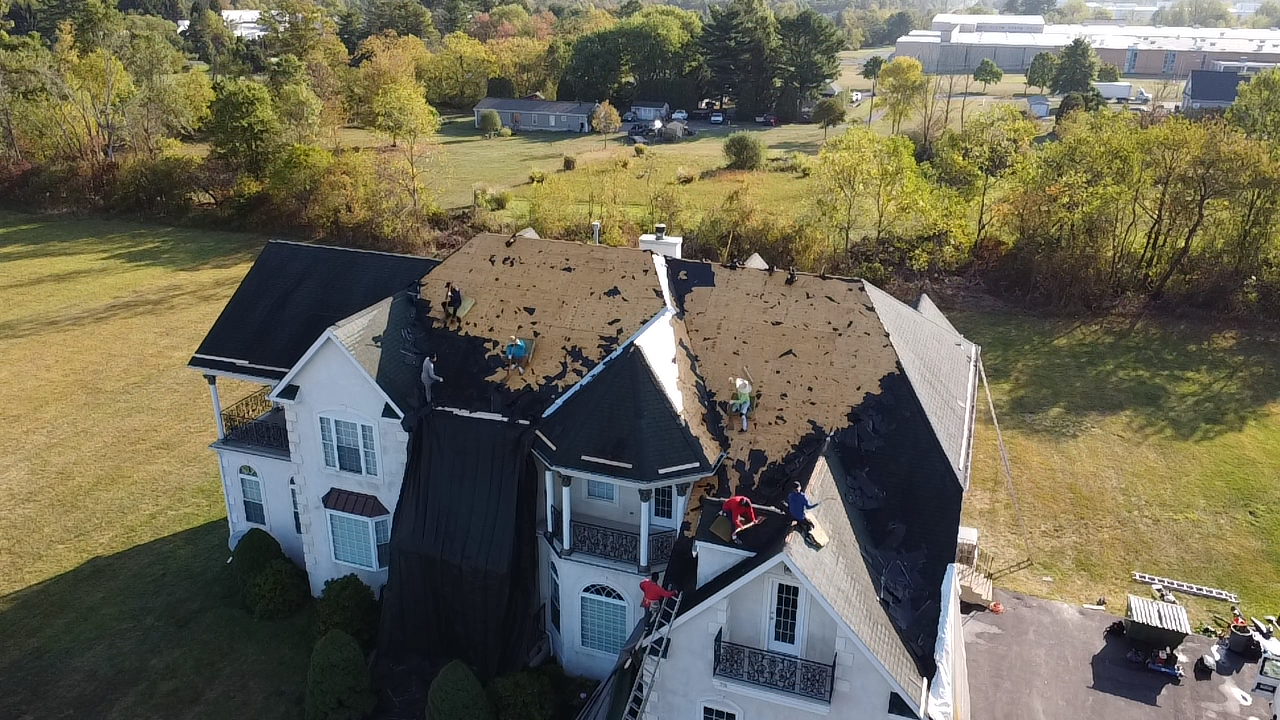
The tear-off is the noisiest part of the project — and the most important. You cannot evaluate what you can't see, and everything that determines how long your new roof lasts is under those old shingles.
Step 3: Decking inspection
With the roof stripped, the plywood or plank decking is fully exposed for the first time in decades. The crew walks it looking for soft spots, rot, water staining, and delamination. Solid decking stays; compromised decking gets cut out and replaced with new wood.
This is the honest-contractor moment of the whole project. Decking condition genuinely cannot be known until tear-off, so a fair contractor explains upfront how decking replacement is priced and gets your sign-off before proceeding — not after.
Step 4: Underlayment, ice barrier, and drip edge
The new roof system starts with what you'll never see:
- Ice and water shield along the eaves and in the valleys. In Pennsylvania this isn't optional — our freeze-thaw winters push meltwater back up under shingles (ice damming), and this membrane is what keeps it out of your house.
- Synthetic underlayment across the remaining deck as the secondary water barrier.
- Drip edge along the roof edges to direct runoff into the gutters instead of behind them.
Step 5: Shingles, flashing, and ventilation
Now the visible roof goes on: starter strips at the edges, shingles in overlapping courses up the roof, new flashing at every wall, chimney, and penetration, and ridge ventilation at the peak. Ventilation is the detail homeowners overlook most — a roof that can't breathe cooks its own shingles in the summer and feeds ice dams in the winter (see attic insulation and ventilation). Adding skylights during a roof replacement also costs less per unit, since the shingles are already off.
Step 6: Cleanup and final inspection
The crew hauls the debris, sweeps the property, and runs magnetic sweepers across the lawn and driveway to pick up stray nails. Then a final walkthrough and inspection of the finished roof.
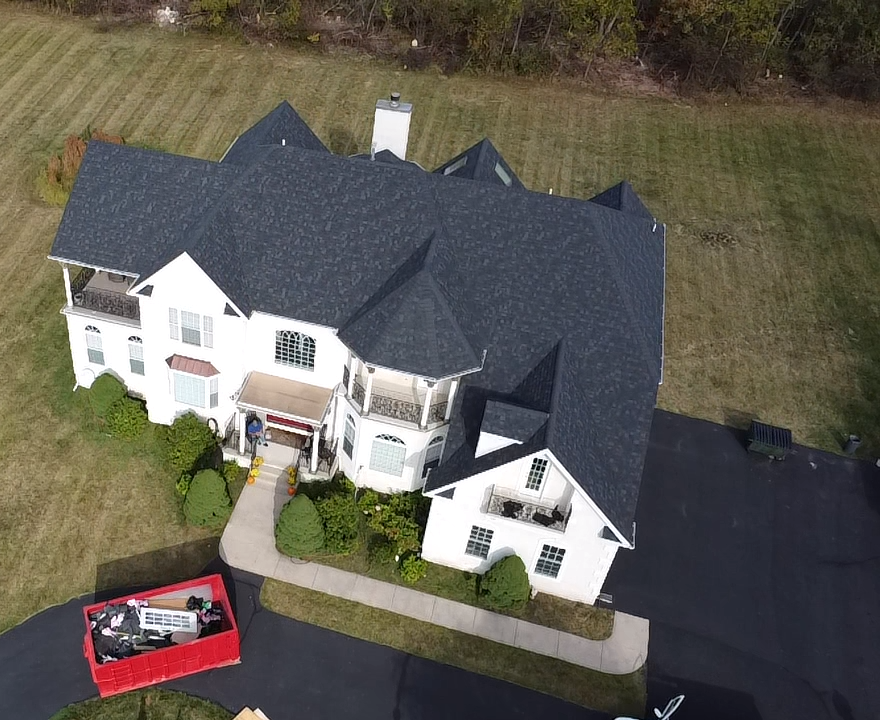
The difference between the first photo and this one is usually a single day or two of work — and a roof system that's new from the wood up.
Thinking about a replacement?
The best first step costs nothing: know your roof. Our satellite measurement tool can pull your roof's real dimensions from your address, and if you've had recent storms, our Storm Damage Checker can tell you whether the weather that hit your neighborhood was severe enough to warrant an inspection.
Frequently Asked Questions
How long does a roof replacement take?
Most single-family residential roof replacements are completed in one to two days, weather permitting. Larger or more complex roofs — steep pitches, multiple levels, lots of valleys — can take longer.
Do I need to be home during my roof replacement?
No. Most homeowners aren't. We do recommend being reachable by phone in case the tear-off reveals decking damage that needs a decision before we proceed.
Will a roof replacement damage my landscaping?
A careful crew protects it. Tarps cover plantings and walkways below the work areas, debris goes into a container or catch system rather than freefalling, and the site is magnet-swept for nails afterward.
What happens if my roof decking is rotted?
Damaged decking gets replaced before any new material goes on — new shingles over soft or rotted wood is a roof that fails early. Decking condition can't be fully known until tear-off, which is why a trustworthy contractor explains how decking replacement is handled before the job starts.
Should shingles be installed over my old roof instead?
An overlay is cheaper upfront, but it hides the decking, adds weight, and usually shortens the new roof's life. We recommend a full tear-off so the whole system — decking, underlayment, flashing — starts fresh.
Roofing done right, the first time
E&K Contracting has served Bucks, Lehigh, and Montgomery County homeowners for over 20 years. Free estimates, no pressure.